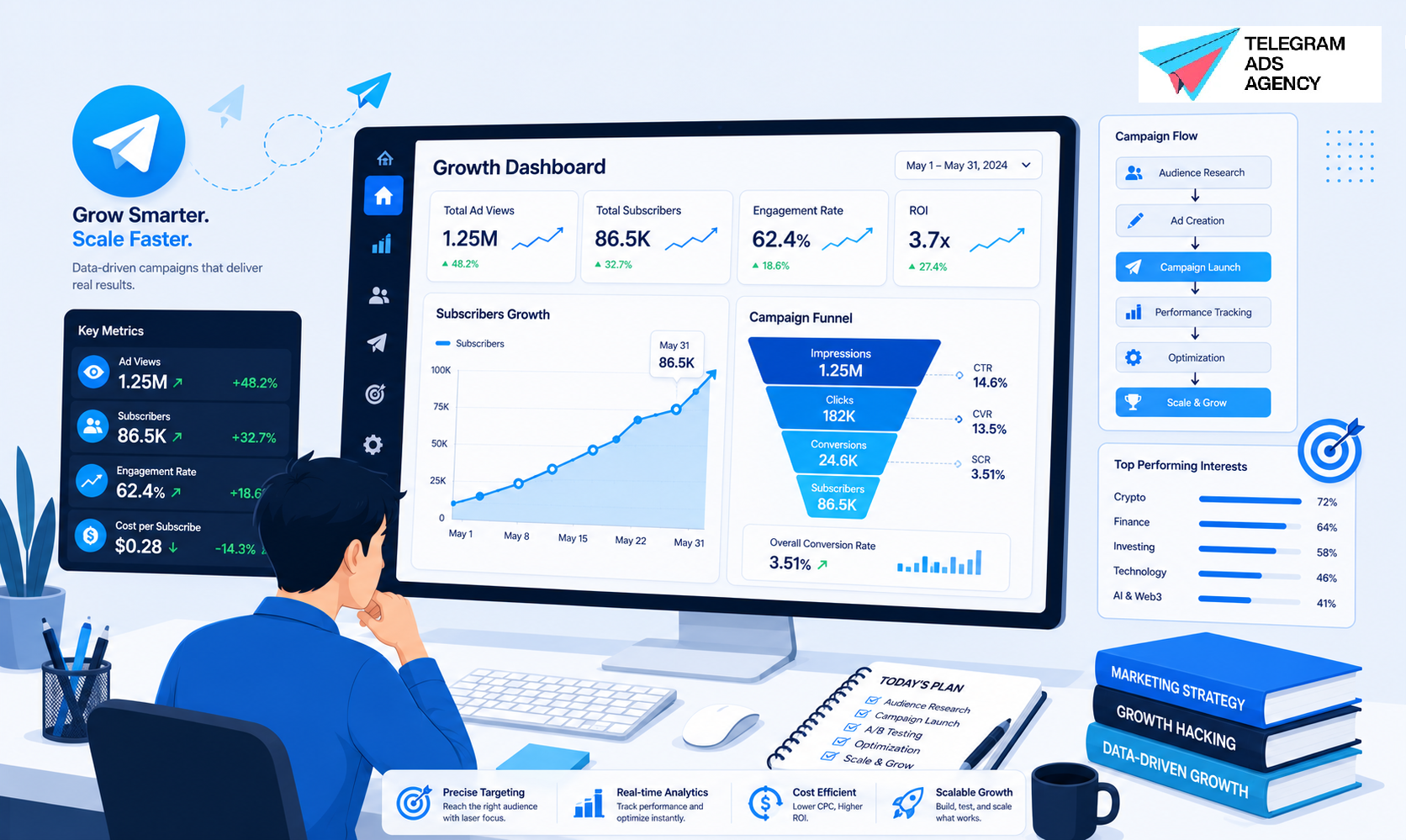
Overview of Telegram Ad Campaigns: A Framework for Success
Telegram ad campaigns let you reach large, focused audiences without feeling overly intrusive. By using Telegram’s built-in tools, brands can place sponsored messages, promote mini-apps, or share direct posts inside relevant channels and chats, right where users are already active.
This makes it easier to grow subscribers, drive app installs, and strengthen brand awareness with messages that feel natural in the flow of conversation. When combined with clear targeting, testing, and regular optimization, Telegram ads can become a reliable part of a broader marketing strategy.
Keep reading to learn how these campaigns work and how to use them effectively.
Key Takeaways
- Telegram ad campaigns utilize precise targeting to ensure messages reach relevant audiences, maximizing engagement and conversions.
- Sponsored messages, mini-app promotions, and direct posts provide various ways to connect with potential subscribers.
- Continuous monitoring and data analysis drive improvement in campaign performance, ensuring long-term success.
The Basics of Telegram Ad Campaigns
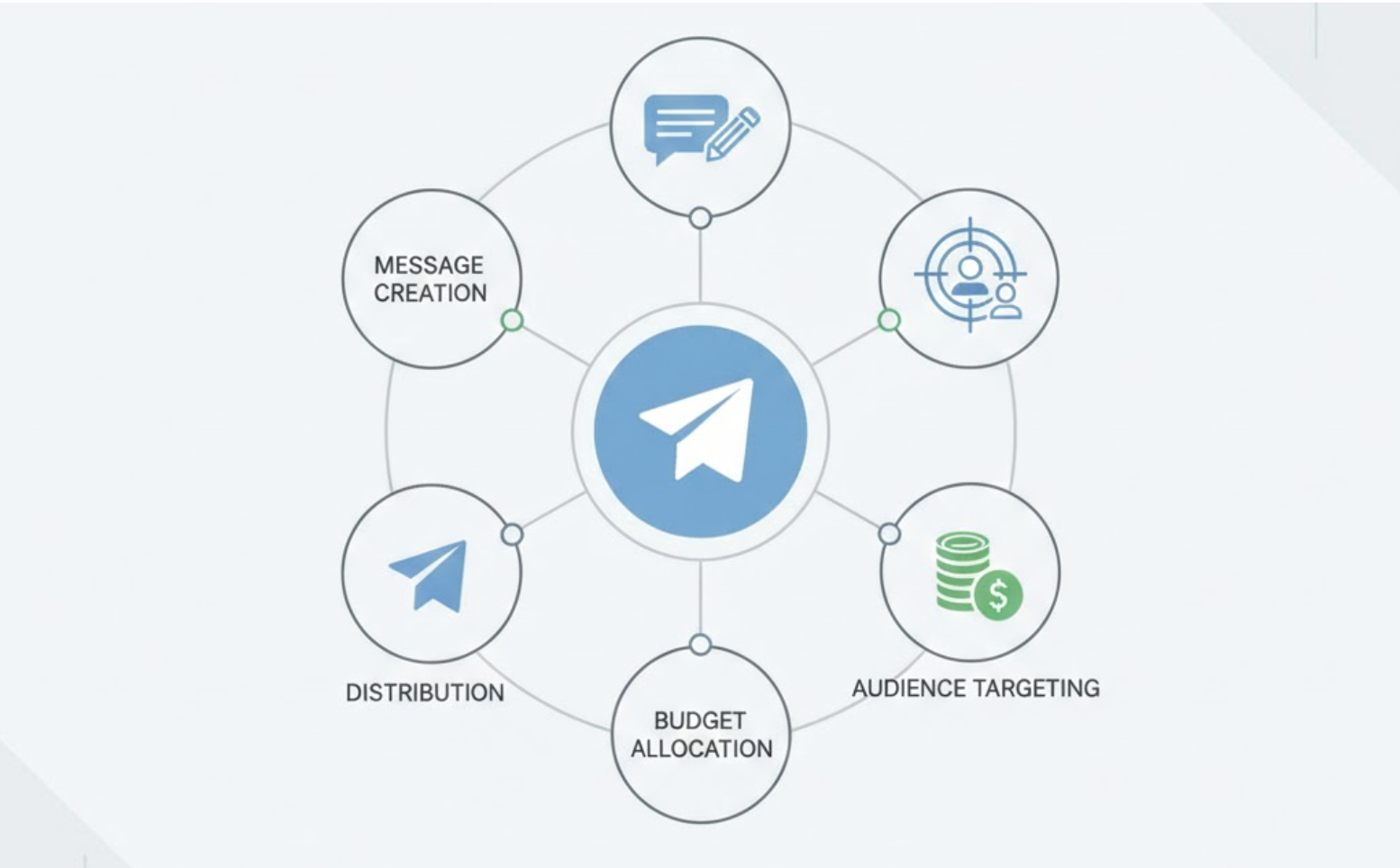
Most strong Telegram campaigns start with simple, clear building blocks. Brands create sponsored messages that appear in public channels with at least 1,000 subscribers, so the ads feel like a natural part of users’ feeds.
“Telegram Ads is the official platform for placing paid advertisements within the popular messaging app Telegram. It allows launching advertising campaigns to attract new users, increase brand reach, boost engagement, and drive sales.” - Popsters
Targeting is where these campaigns really take shape. Advertisers can narrow audiences by topics, languages, and geographic regions, so messages land in front of people who are more likely to care. This focus helps brands reach users who are genuinely interested, whether the goal is to get them to join a channel, interact with a bot, or install an app.
Planning sits at the center of all this. Before launching, brands define clear objectives and set key performance indicators (KPIs) to track success, such as subscriber growth, click-through rates, or cost per install. Budgets can stay small at first, used for testing and learning, or grow into larger investments once campaigns prove effective and scalable.
Campaign Objectives and Planning

Telegram campaigns generally focus on three core objectives:
- Acquiring subscribers for channels or bots
- Promoting app installs
- Elevating brand awareness
Each objective requires specific planning and goal-oriented strategies.
First, businesses must set measurable goals, such as subscriber growth rates or return on ad spend (ROAS) targets. Common planning benchmarks include:
- Subscriber growth targets over a defined period
- Cost-per-subscriber or cost-per-install limits
- ROAS or conversion efficiency goals
Setting budgets for these campaigns can vary, from around $500 for initial tests to over $50,000 for full-scale efforts. Agencies often help with this step, offering insights into how to allocate budgets effectively for maximum impact.
Core Components of Telegram Ad Campaigns
When launching a Telegram ad campaign, understanding the core components is critical. Many brands choose to work with a Telegram Ads Agency at this stage to align strategy, formats, and targeting from the start. Three primary factors play a role in the overall success: ad formats, targeting precision, and campaign structure.
“The Telegram Ad Platform is a tool to create sponsored messages in public one-to-many channels with 1000+ subscribers.”
-
Telegram
| Ad Format | Where It Appears | Primary Goal | Best For |
|---|---|---|---|
| Sponsored Messages | Inside public Telegram channels | Channel or bot growth | Subscriber acquisition, brand awareness |
| Mini-App Promotions | Within Telegram mini-apps | Engagement and clicks | Gaming, crypto, interactive products |
| Direct Channel Posts | Posted directly in selected channels | Targeted exposure | Niche audiences, trust-based promotions |
Ad Formats
Telegram gives advertisers a few different ways to show up in front of users, each with its own role:
- Sponsored Messages
These are native posts that appear inside public channels and are clearly marked as “Sponsored.” They blend into the regular content flow but follow Telegram’s rules, including a focus on directing traffic to Telegram channels or bots, not external sites. They work well for growing subscribers or bot users. - Mini-App Promotions
Mini-app promotions use interactive elements inside Telegram mini-apps. They often rely on eye-catching visuals and simple interactions. These are especially common in areas like gaming or crypto, where users are already used to tapping, swiping, and exploring. When done well, they can reach high click-through rates. - Direct Channel Posts
These are paid promotions arranged directly with public channel owners. Brands choose channels that match their niche, such as finance, technology, or entertainment, and publish a tailored post to that audience. Prices can vary a lot, depending on channel size, activity, and how sought-after the audience is.
Choosing between these formats, or combining them, depends on what you want most: subscribers, clicks, installs, or broad awareness.
Targeting Precision
Reaching the right people matters more than just reaching a lot of people. Telegram’s targeting tools help sharpen that focus, and understanding how telegram ad agencies operate often reveals why small adjustments in targeting can significantly affect performance.
- Geographic Location
Advertisers can reach users across more than 220 countries. This makes it possible to test new regions, support global launches, or keep campaigns local and focused. - Demographics
Filters like age, gender, and language help adjust messaging so it feels relevant. A channel aimed at young crypto users, for example, will likely need different wording than one focused on business news. - Behavioral Factors
Some campaigns aim at specific user behaviors, such as holders of TON wallets, which is especially useful for crypto or Web3 products. This type of targeting aligns offers with users who are more likely to act.
When these filters are combined thoughtfully, ads feel more aligned with what users actually care about, which usually leads to better engagement and more efficient spend.
Campaign Structure
Behind every visible ad, there’s a process that keeps everything organized. Many teams rely on Comprehensive Telegram Ads Agency Management to maintain consistency across planning, execution, and optimization. Agencies often follow a clear campaign lifecycle that looks something like this:
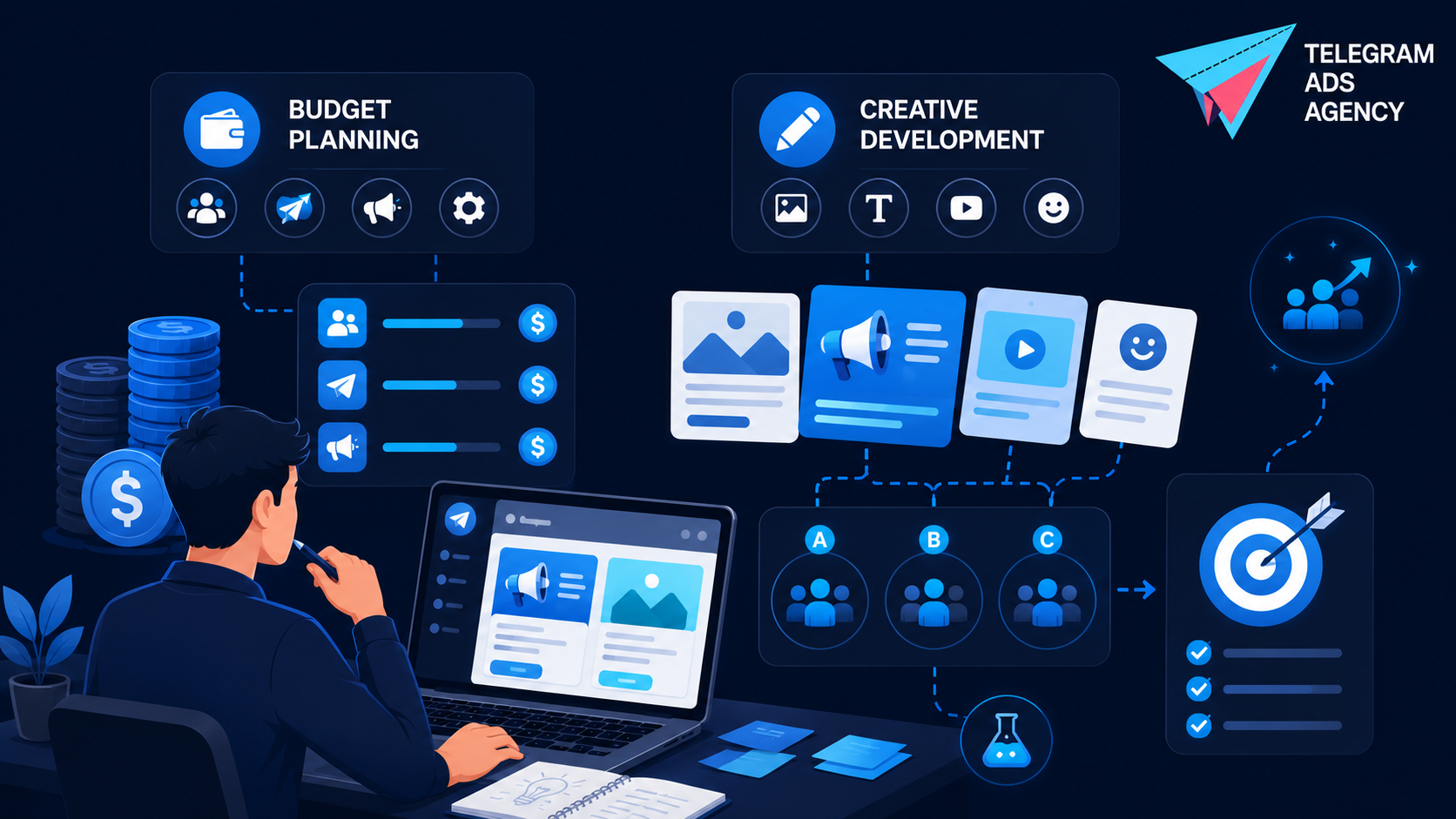
- Planning Phase (Days 1–3)
Objectives are set, such as subscriber growth, app installs, or awareness. Audience segments are researched, channels are shortlisted, and budgets are mapped out by goal and format. - Creative Development (Days 4–5)
The team prepares ad texts, visuals, and other creatives. This includes matching the tone and style of the target channels while still keeping the brand identity clear. - Launch and Auction (Day 6 and onward)
Campaigns go live and enter the Telegram auction, where bids help determine placements and reach. From this point, performance is tracked in real time, bids, creatives, and audiences can be adjusted to improve results and keep costs under control.
Following a structure like this does not guarantee perfect results, but it does give campaigns a stable base, so each change is guided by data instead of guesswork.
Performance Optimization

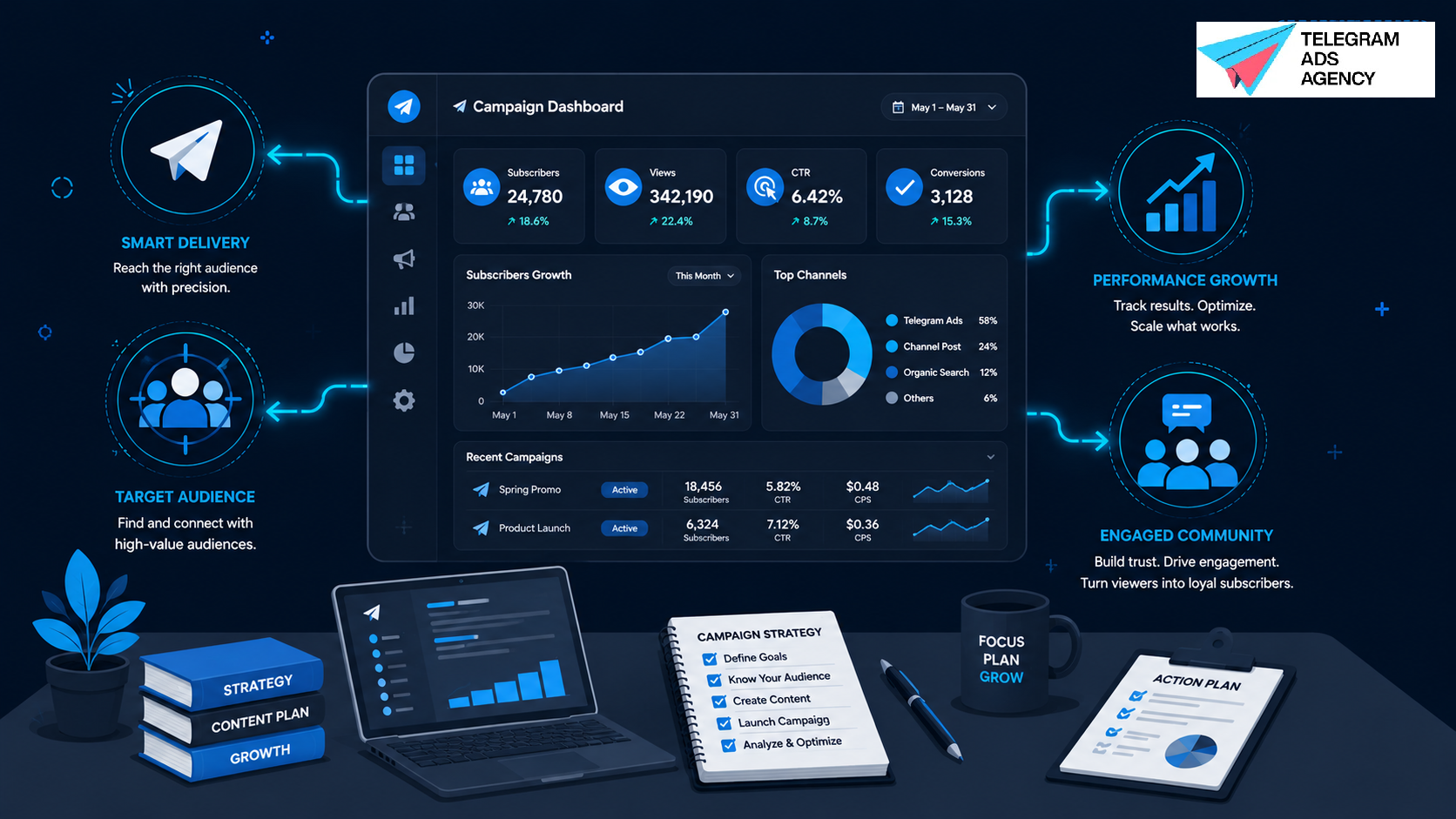
Once a campaign is live, daily optimization is crucial. Tracking key metrics, such as:
- Impressions
- Click-through rates (CTR)
- Channel growth rates
These indicators enable brands to understand their campaign's effectiveness.
Early in the campaign, analyzing performance helps determine which ads are performing well and which ones fall short of expectations. Common optimization actions include:
- Pausing ads with CTR below 1%
- Adjusting creatives, copy, or targeting
- Scaling ads that show strong engagement
This ongoing optimization process is vital, especially in a rapidly changing digital landscape where audience preferences can shift quickly. By remaining responsive, brands can ensure they maintain relevance and interest among their audience.
Case Study Example
You can see the real strength of Telegram campaigns when you look at a focused example. Take a Crypto Signal Bot promotion: the team ran a 14-day campaign with a $5,000 budget, placing ads in 15 finance-focused channels, each with around 50,000 subscribers. These channels already attracted users who followed markets and trading, so the offer felt relevant instead of random.
The numbers tell a clear story. The campaign reached a click-through rate (CTR) of 3.2%, which led to 11,892 new subscribers for the bot. After one week, about 68% of those users were still active, which is a strong retention rate for this type of product. With premium subscriptions priced at $15 per month, the campaign delivered a return on ad spend (ROAS) of 4.1x.
In other words, the initial budget didn’t just pay for itself, it generated meaningful recurring revenue, showing how careful targeting and planning can turn impressions into long-term users.
Agency-Managed Execution
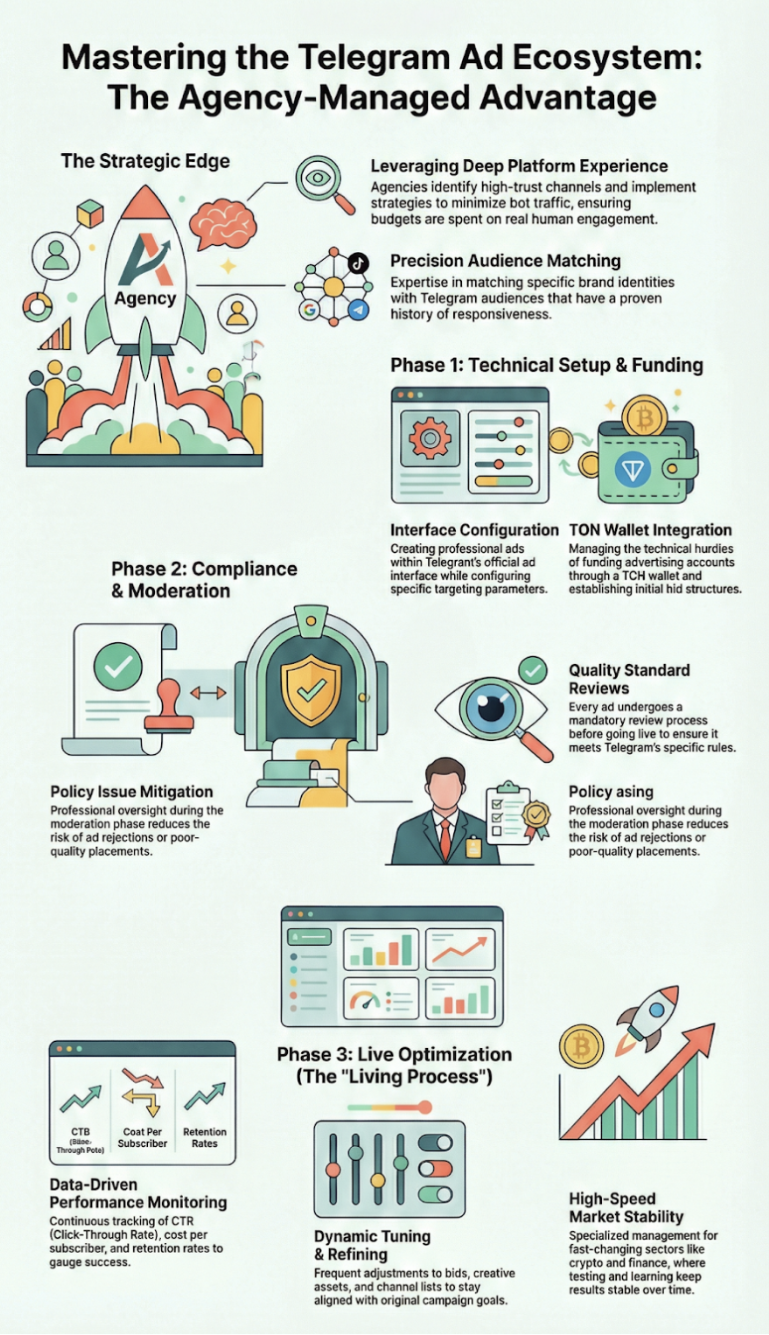
Running Telegram ads can look simple from the outside, but there are plenty of moving parts beneath the surface. This is where agencies often come in. Their main advantage is experience: they know which channels are trustworthy, how to reduce bot traffic, and how to match a brand with audiences that actually respond.
The technical setup usually starts with creating ads in Telegram’s official ad interface, funding the account through a TON wallet, and then configuring targeting and bids. Before any ad appears live, it passes moderation checks to ensure it meets Telegram’s rules and basic quality standards. This review process reduces the chance of policy issues or poor-quality placements.
Once the campaign is running, agencies keep a close eye on performance. They watch metrics like CTR, cost per subscriber, and retention, then adjust bids, creatives, or channel lists to stay aligned with the original goals.
This ongoing tuning is especially useful in markets that change quickly, such as crypto or finance. Instead of setting a campaign and leaving it alone, agencies treat it as a living process, testing, learning, and refining to keep results stable and risk controlled over time.
FAQs
How do Telegram sponsored messages campaigns work from setup to launch?
Telegram sponsored messages run through an official ad platform setup using public broadcast channels only. Advertisers choose channel targeting selection with topic category filters and language geo restrictions. Campaigns use CPM auction bidding, set start end dates configuration, and apply frequency capping controls to manage daily views per user while delivering non-intrusive native format ads safely.
What targeting options help reach the right audience on Telegram?
Targeting focuses on channel subscriber impressions using topic category filters, language geo restrictions, and competitor channel targeting. Advertisers can test niche audience penetration, premium user segmentation, and OS device breakdowns. Geo expansion testing and language localization variants allow gradual scaling while traffic quality scoring helps refine placements and avoid wasted impressions from poor-performing channels over time.
How are budgets, bids, and performance tracked during campaigns?
Budgets rely on CPM auction bidding with automated budget pacing automation. A real-time analytics dashboard shows impression volume tracking, CTR click through metrics, and hourly performance monitoring. Campaign pause resume options allow quick control, while ROI performance calculators, attribution window customization, and multi-touch tracking models support clear measurement and ongoing optimization decisions without guesswork.
What ad formats and creative rules should advertisers know?
Ads use non-intrusive native format designs with text image button creatives. Copy follows a 160 character text limit and internal link structures. Mobile optimized display ensures strong delivery across devices, including desktop channel viewing. Creative spec compliance, image dimension rules, and video format limits help maintain approval rates and consistent visibility across different placements.
How do advertisers scale Telegram ad campaigns safely?
Scaling focuses on campaign scaling strategies like similar ad duplication, dynamic ad optimization, and automated rule adjustments. Whitelisting top channels and blacklisting poor performers improves efficiency. Seasonal campaign timing, motivated traffic sourcing, and brand awareness goals support growth, while fraud bot filtering and viewability standard metrics protect traffic quality during expansion phases.
Scaling Smarter With Telegram Ads and Expert Campaign Support
Many brands are starting to see Telegram not just as a messaging app, but as a focused channel where they can speak directly to people who actually care. When you use the right formats, targeting, and messaging, Telegram ads can help you reach users in a way that feels more private, less noisy, and more intentional than many other platforms. The key is understanding how the ecosystem works, testing carefully, and tracking what truly drives results, not just clicks.
If you prefer not to manage this process alone, partnering with a specialized agency can make your campaigns more effective and efficient. Working with Telegram Ads Agency gives you access to data-driven strategies, hands-on optimization, and platform-specific expertise to help you scale with confidence. If you’re ready to take Telegram advertising seriously or want expert support for your next campaign, connecting with us today
References
- https://popsters.com/blog/post/advertising-campaign-in-telegram-ads/
- https://ads.telegram.org/getting-started/
Related Articles
- http://www.telegramads.agency/telegram-ads-agency
- http://www.telegramads.agency/comprehensive-telegram-ads-agency-management
- http://www.telegramads.agency/how-telegram-ad-agencies-operate