How Telegram Ad Agencies Operate to Save You Time
An agency’s job is to handle the machinery you don’t see. They bridge the gap between your goals and Telegram’s unique ecosystem, turning manual, time-heavy processes into a managed service. Instead of negotiating with channel owners or decoding ad rules, they map targeting, placements, and budgets for you.
The result is targeted visibility that runs quietly in the background while you stay focused on growth. If you’ve ever wondered how campaigns actually move from idea to exposure on Telegram, the answer lives in these behind-the-scenes systems. To see how the cogs turn in practice, keep reading.
Key Takeaways
- They automate channel access, replacing thousands of manual negotiations with a single platform.
- They navigate two ad systems: the strict official sponsored messages and the flexible native ad networks.
- They manage the financial pipeline, handling TON payments, revenue splits, and compliance so you don't have to.
Official Telegram Sponsored Messages

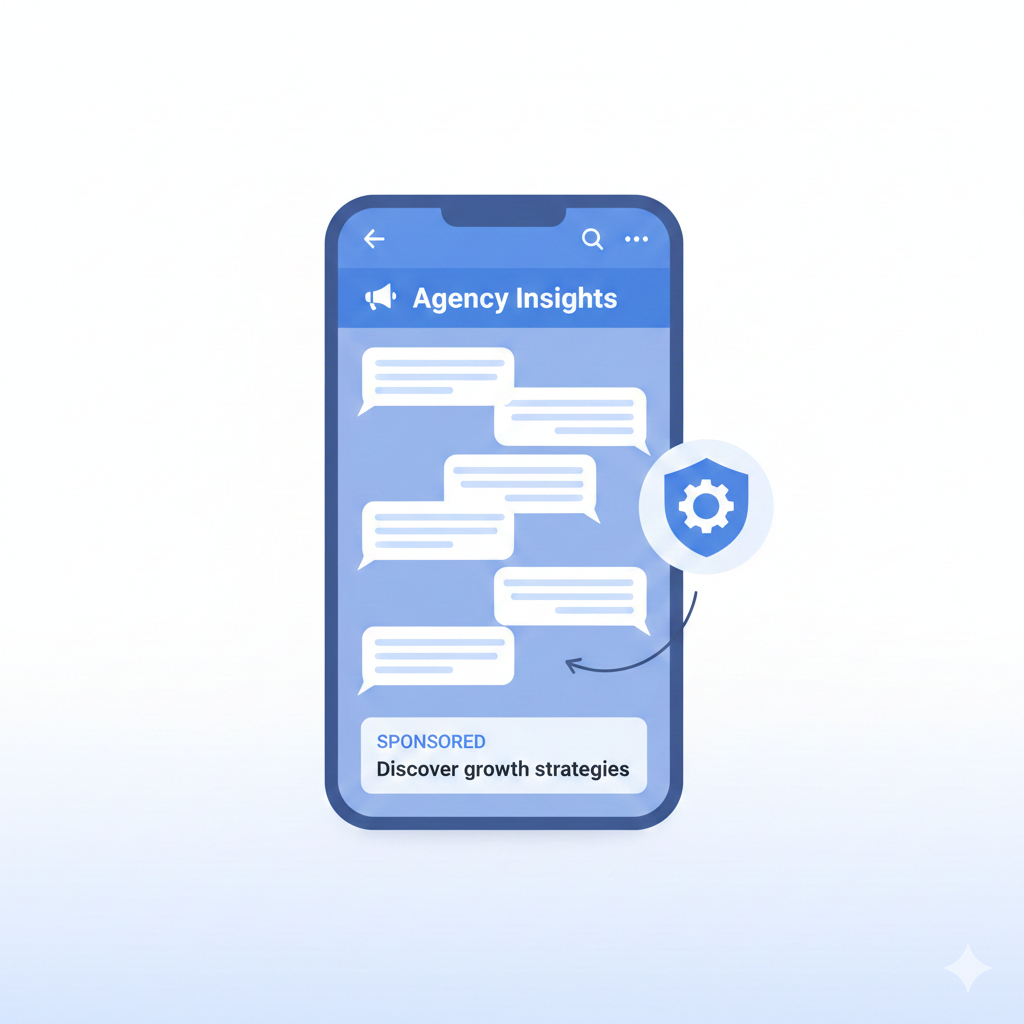
You usually see the official path first. Telegram’s own ad system uses Sponsored Messages, those short text ads that sit at the bottom of public channels with more than 1,000 subscribers.
Agencies that follow this route act like your operator inside Telegram’s platform. They don’t own the system, but they know how to use it without wasting your budget. Their main jobs are:
- Writing ad copy that passes Telegram’s strict rules
- Avoiding banned or sensitive affiliate niches
- Setting bids inside Telegram’s auction so you actually get impressions
The ads are simple, mostly:
- Plain text
- Sometimes a link
- Designed to be quiet, not flashy
What you really pay for is experience with approvals and performance. The agency understands what gets blocked, what gets through, and how to test different messages without breaking policy. For brands that want safety and stability, this official model is usually the starting point within comprehensive Telegram ads agency management.
Native Posts via Third-Party Networks
Then there’s the more flexible path, where agencies rely on native ads instead of Telegram’s own system. Here, the agency taps into a large pool of channels they’ve already contacted or connected through third-party networks.[1]
The flow usually looks like this:
- You provide the creative (image, long text, or link)
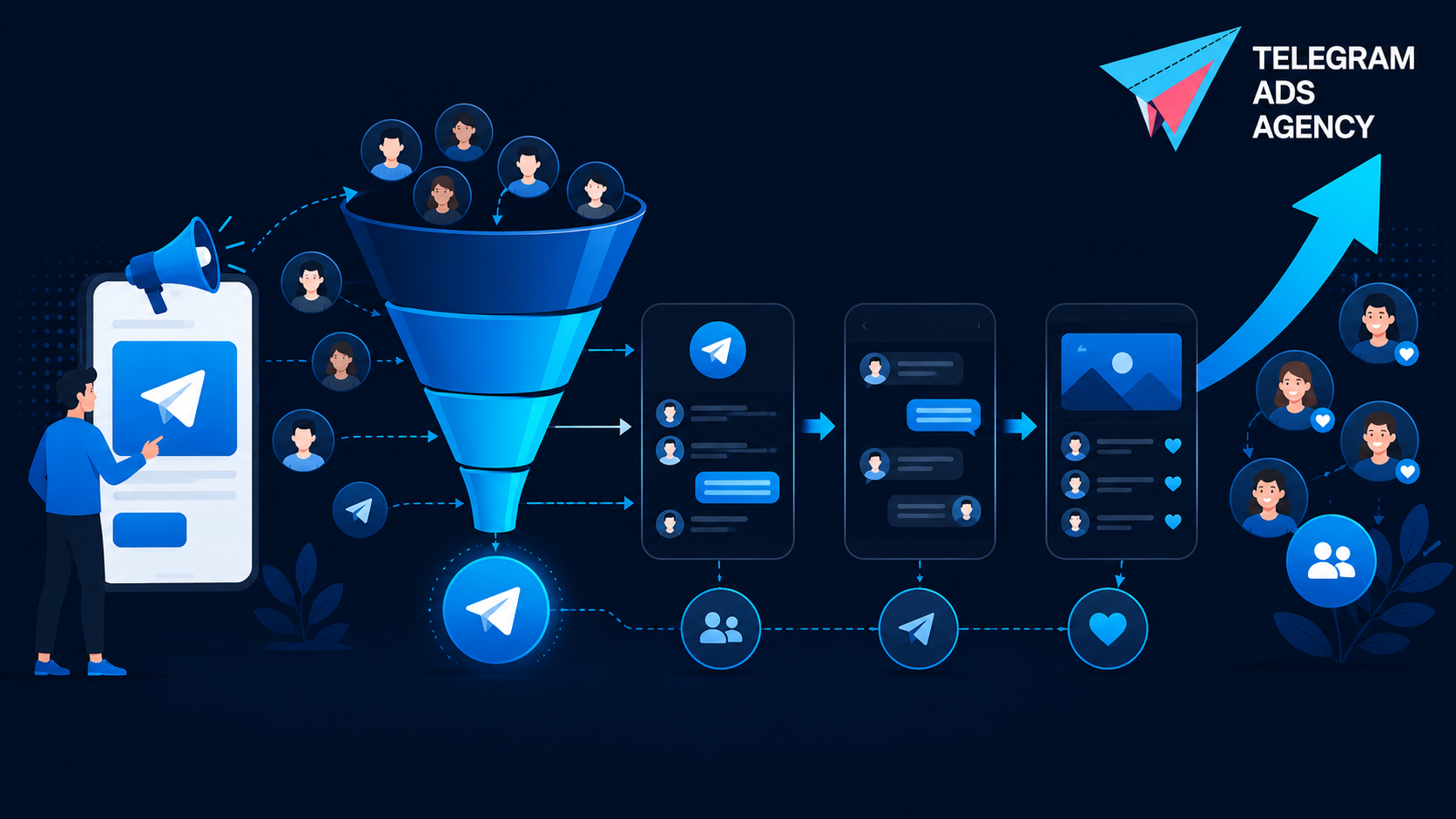
- The agency distributes it to chosen channels
- The post appears in the channel feed like a normal admin post
These agencies often:
- Plug into ad networks
- Use CPC or CPA models, depending on your goals
- Target Telegram Mini Apps for extra reach
Because they’re not limited by Telegram’s official ad rules, they can:
- Allow a wider range of niches
- Use richer visuals
- Test many formats and angles
Management becomes the core skill here. A good agency keeps a close eye on:
- Which channels bring real, active users
- Which channels inflate numbers with low-quality traffic
Some will run everything through platforms like WEDEX, where you can:
- Browse channels
- Check audience stats
- Book placements under the agency’s main account
So the model is less about one big platform and more about a curated media network that the agency keeps tuning over time.
How agencies actually target people on Telegram
The first surprise with Telegram is how simple the targeting tools look on paper, but agencies still squeeze a lot out of them. They start with broad filters, then keep tightening.
Most campaigns begin with:
- Geo-targeting across 220+ countries (including the option to exclude certain countries)
- Language targeting, so the ad matches how people actually talk
- Device targeting by operating system (iOS, Android, desktop)
Then there’s one very practical filter:
Many agencies
exclude Telegram Premium users, because Premium users can turn off ads. That way, you’re not paying for impressions that may never appear, and your budget focuses on people who can actually see the ad.
The real control comes from topic-based channels. Agencies organize channels into 40+ categories such as:
- Cryptocurrency
- Technology
- Gaming
- Local news
If you’re promoting a crypto project, your ads run mainly in crypto channels. It’s direct, a bit old-school, but it matches intent: users are already there for that exact type of content.
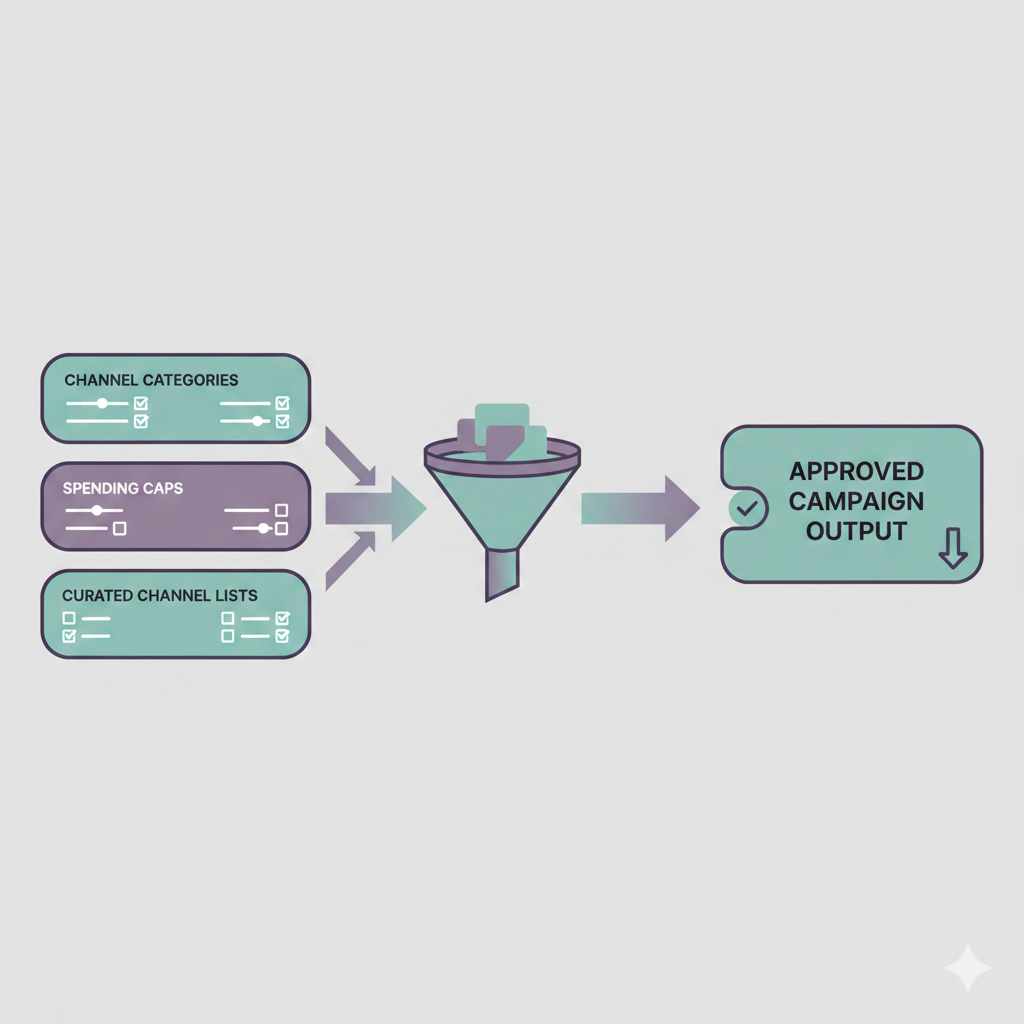
Narrowing the focus with categories, caps, and channel lists

Once the basic targeting is set, agencies push further by controlling where and how often ads appear.
They usually:
- Sort and buy traffic from interest-based categories (for example, finance, sports, education)
- Set frequency caps, so a user only sees your ad once or twice per day across the entire network
- Exclude low-value segments that drain spend without real engagement
The most strategic layer comes from whitelists and blacklists:
- A whitelist is a curated set of channels that perform well and stay on-brand
- A blacklist is a list of channels to avoid due to poor results or weak audience fit
Account managers review campaign data, often weekly, and spot patterns like:
“Ten channels are driving most of your sign-ups, while dozens are just burning impressions.”
From there, they:
- Keep the top-performing channels in the whitelist
- Add underperforming or off-topic channels to the blacklist
- Gradually shift budget from broad coverage to a tighter, proven set of channels
Over time, the campaign moves from a wide, experimental spread to a more focused and reliable setup, where every impression stands a better chance of turning into a click, a lead, or a sale.
How Money Actually Moves in a Telegram Ad Campaign
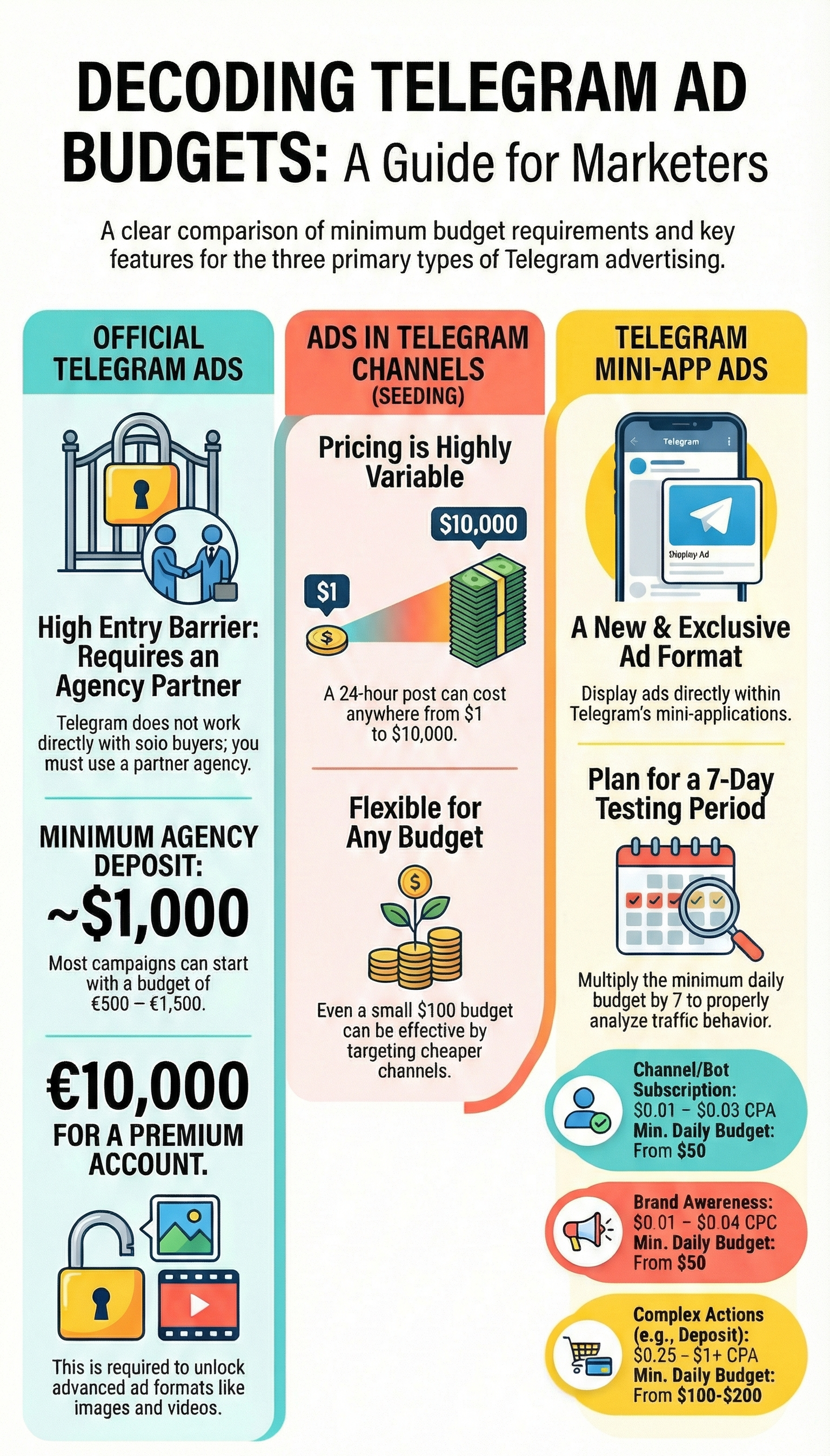
Money inside a Telegram ad campaign doesn’t just move randomly, it follows a pretty clear path. Most advertisers don’t realize how many moving parts are involved until they see a full Telegram agency service breakdown laid out step by step. You top up your balance, and the agency handles the allocation.
On the backend, a lot of official Telegram ads are bought using TON, Telegram’s native cryptocurrency. So agencies will usually:
- Manage TON wallets on your behalf, or
- Convert your fiat (like USD or EUR) into TON behind the scenes
For channel owners, the revenue share is baked into the system. Through the TON blockchain, 50% of the ad revenue from their channel is sent to them automatically. No chasing payments.[2] This auto-split helps keep creators motivated to grow their audience and keep posting good content.
The agency’s fee comes from the advertiser side, usually as:
- A percentage of total ad spend, or
- A fixed or tiered management fee
So you see one cost line; they handle the messy part.
Agency Management vs. Direct Deals with Channel Owners

When you compare going through an agency with dealing directly with channel owners, the differences sit mostly in speed, effort, and scale.
Agency management usually gives you:
- Fast setup: Campaigns can go live in hours through automated platforms
- Centralized payments: One invoice, in fiat or crypto, to a single partner
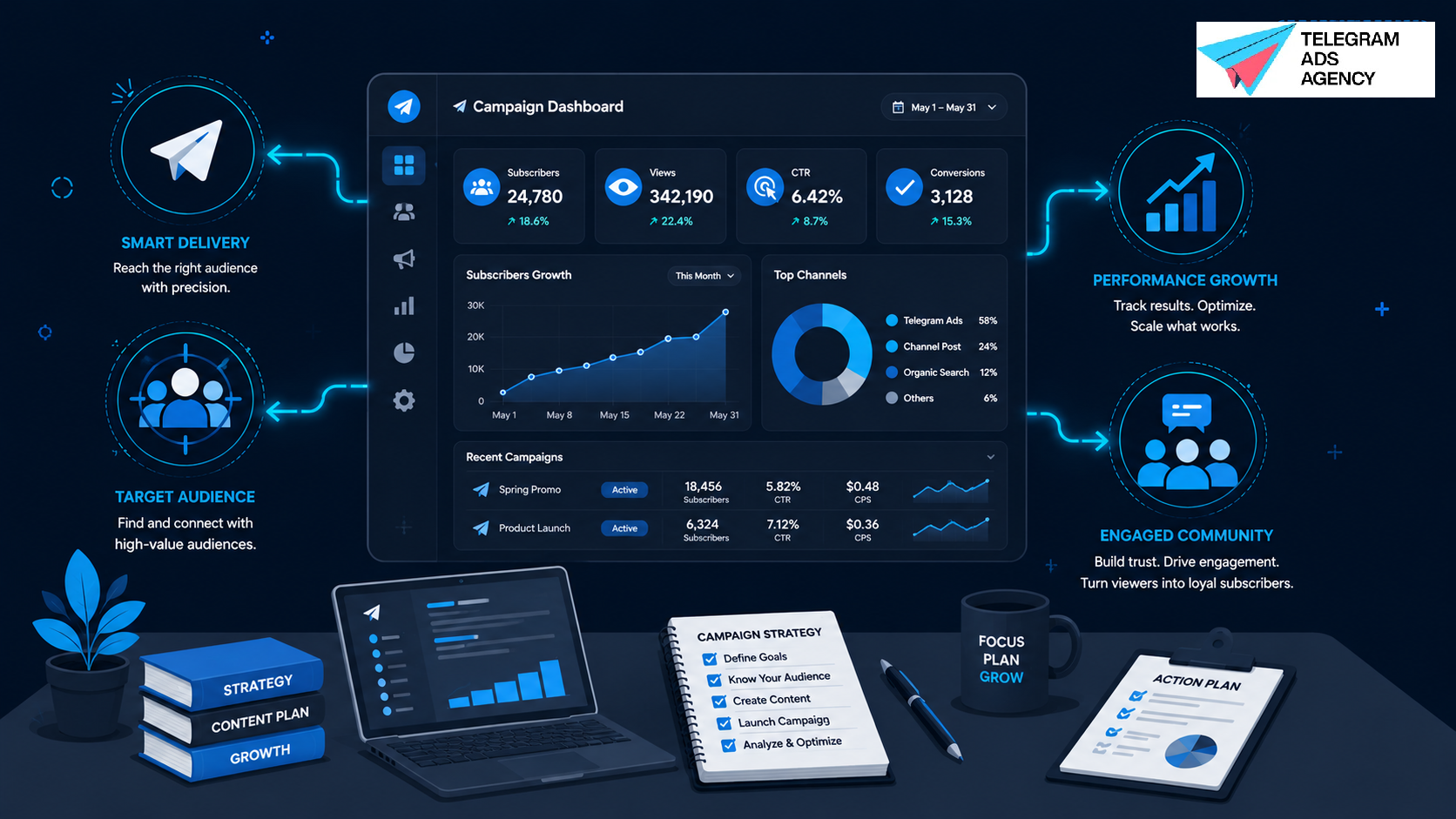
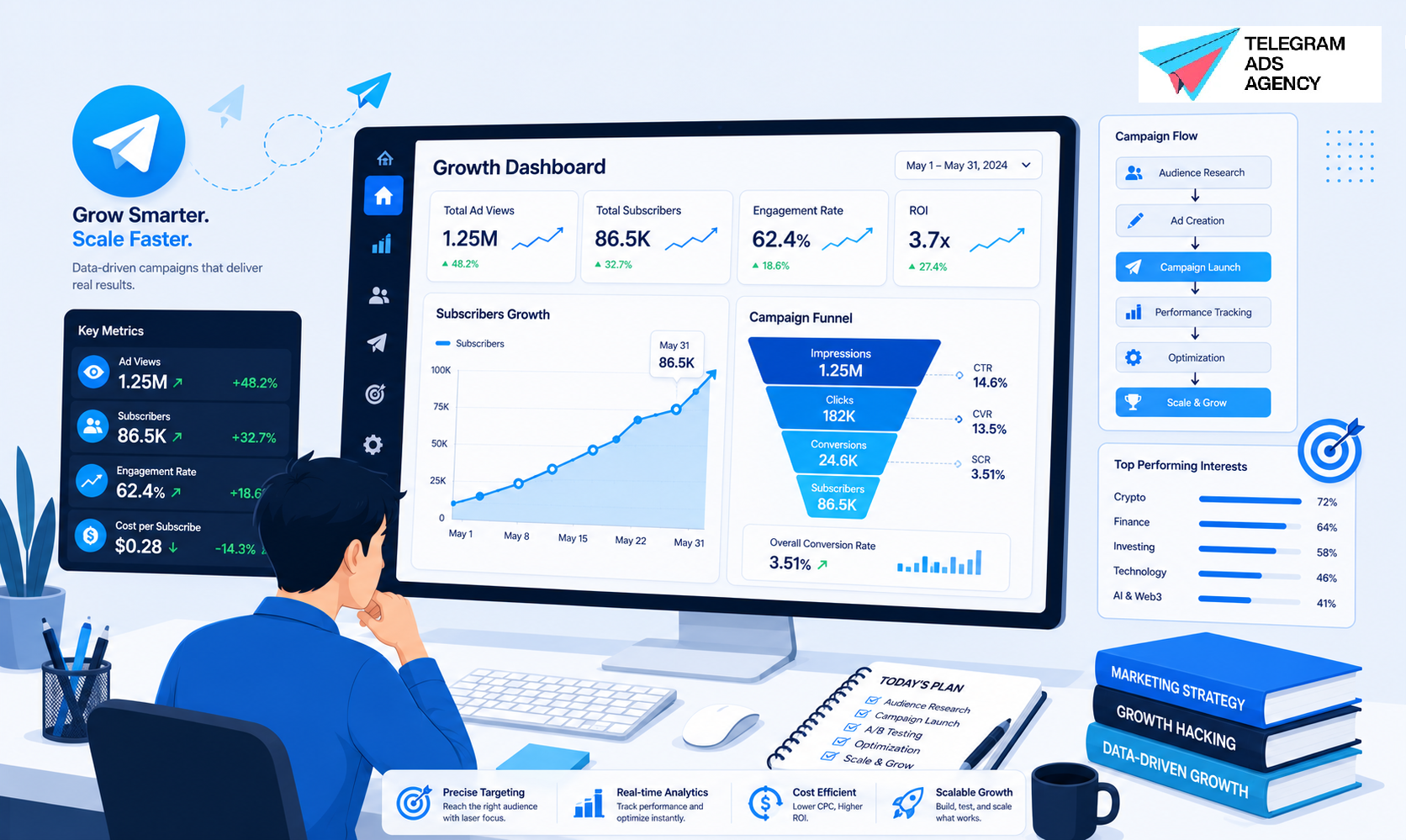
- Unified analytics: One dashboard for performance across all channels
- High scalability: You can add dozens or hundreds of channels quickly
Direct owner deals often mean:
- Slower setup: You contact each admin, negotiate terms, and wait for replies
- Fragmented payments: Many small transfers, often in crypto only
- Scattered reporting: You collect screenshots and stats from each channel
- Low scalability: Every new channel repeats the same manual process
So the agency’s whole structure is designed to absorb the complexity, payments, tracking, and relationships through
Telegram ad management services, while you focus on results.
Do agencies handle Moderation and Compliance
This is arguably their most critical role, acting as a buffer between your ad and Telegram's rules. For the official Sponsored Messages path, moderation is rigid. Telegram manually reviews every ad. They reject anything related to gambling, certain financial products, most affiliate offers, and anything deemed misleading.
An agency's experience here is priceless. They know the phrasing that triggers a rejection. They'll advise on a copy that's plain, factual, and likely to pass. They're your editor for the moderation queue.
For native ad placements through third-party networks, the rules are different. They're the network's or the agency's own guidelines, which are often more permissive. But a reputable agency still enforces compliance, not just with platform terms but with campaign effectiveness.
They'll vet channels for you, checking for real engagement versus bot-driven subscriber counts. They'll ensure your ad isn't placed next to offensive or irrelevant content, protecting your brand. They handle the constant auditing so you get brand-safe visibility.
FAQ
How do Telegram advertising agencies run ads inside public channels with 1000 subscribers?
Telegram advertising agencies use the self-serve ad platform to place sponsored messages and native ads Telegram inside public channels 1000 subscribers. They manage ad moderation Telegram, compliance guidelines Telegram, channel whitelist, and blacklist channels.
Agencies handle the ad bidding system, smart CPM Telegram, oCPM bidding, direct click model, budget minimum Telegram, scheduling ads Telegram, and ad frequency control.
What targeting options explain how Telegram ad agencies operate campaigns effectively?
They use geo targeting ads, language targeting Telegram, OS targeting campaigns, device targeting options, carrier targeting ads, interest-based targeting, and behavioral targeting Telegram.
Agencies segment users with audience segmentation Telegram, topic categories Telegram, premium user exclusion, and mobile proxy Telegram ads. This helps reach high engagement channels, low competition niches, and verticals allowed Telegram.
How do agencies track results and improve ROI in Telegram campaigns?
Agencies rely on the Telegram Ads dashboard, performance analytics, and ROI Telegram campaigns. They use conversion tracking Telegram, A/B testing Telegram, ad creative optimization, landing page optimization, and ad fatigue prevention.
Tools include click cap daily, channel ER metrics, subscriber growth ads, user acquisition Telegram, sales funnel Telegram, and real-time bidding RTB data.
How do payments, revenue, and compliance work in Telegram ad operations?
Payments include bitcoin payments, crypto payments ads, and fiat payment options. Agencies manage channel owner revenue, negotiated ad rates, revenue share 50%, payout thresholds, and minimum traffic requirements.
They follow compliance guidelines Telegram, fraud prevention Telegram, blackhole traffic filter, cloaking Telegram ads rules, and verticals like gambling ads Telegram, dating offers Telegram, and finance verticals Telegram.
How do advanced ad formats and networks fit into Telegram advertising?
Agencies use Telegram Mini Apps ads, Telegram bots advertising, Mini App monetization, push notifications Telegram, and retargeting pops.
They work WEDEX ad platform, DSP Telegram platforms, SSP integration, header bidding Telegram, header auction bidding, waterfall ad sources, programmatic Telegram ads, and yield management channels for monetization strategies Telegram.
The Telegram Agency Advantage
Telegram ad agencies translate your goals into actions that work inside Telegram’s fragmented, privacy-first system. They coordinate channel owners, ad formats, payments, and targeting so you don’t have to manage the mess behind the scenes.
The result is a clearer, more predictable way to buy attention on Telegram. If you want structure without friction, working with a trusted Telegram Ads Agency is a smart place to start.
References
- https://ads.telegram.org/getting-started
- https://telegram.org/tos/content-creator-rewards
Related Articles
- http://www.telegramads.agency/comprehensive-telegram-ads-agency-management
- http://www.telegramads.agency/telegram-agency-service-breakdown
- http://www.telegramads.agency/telegram-ad-management-services