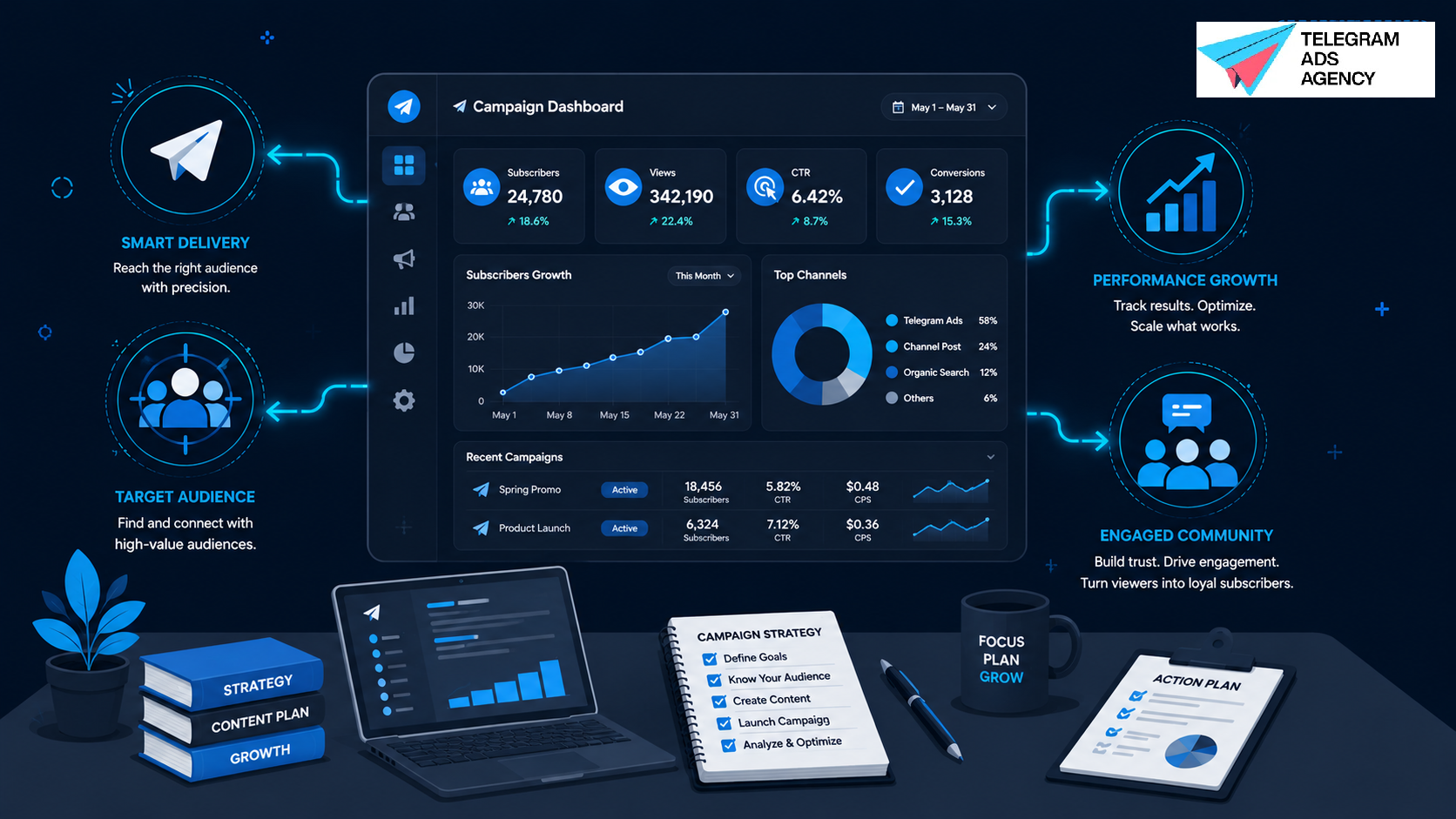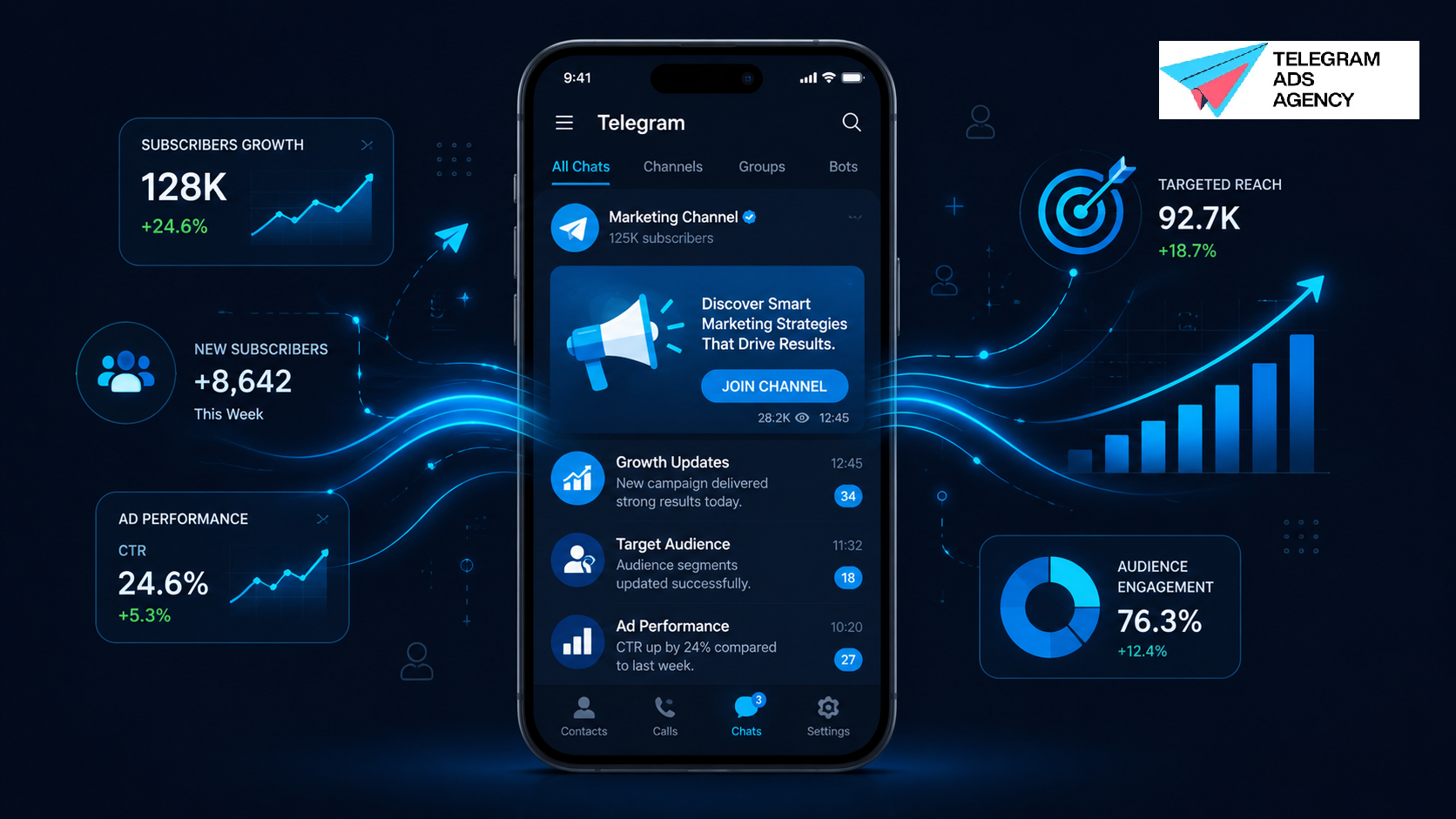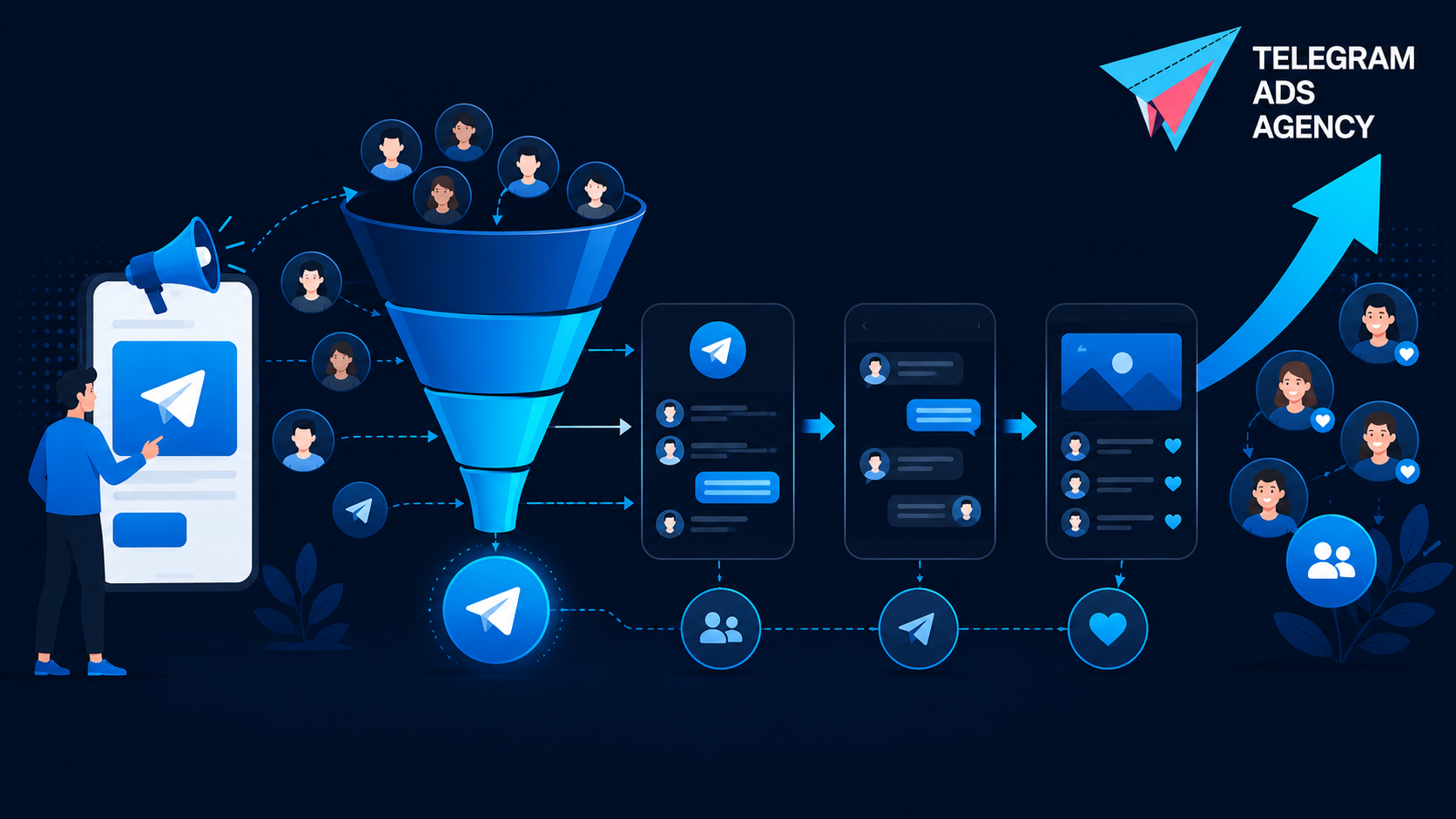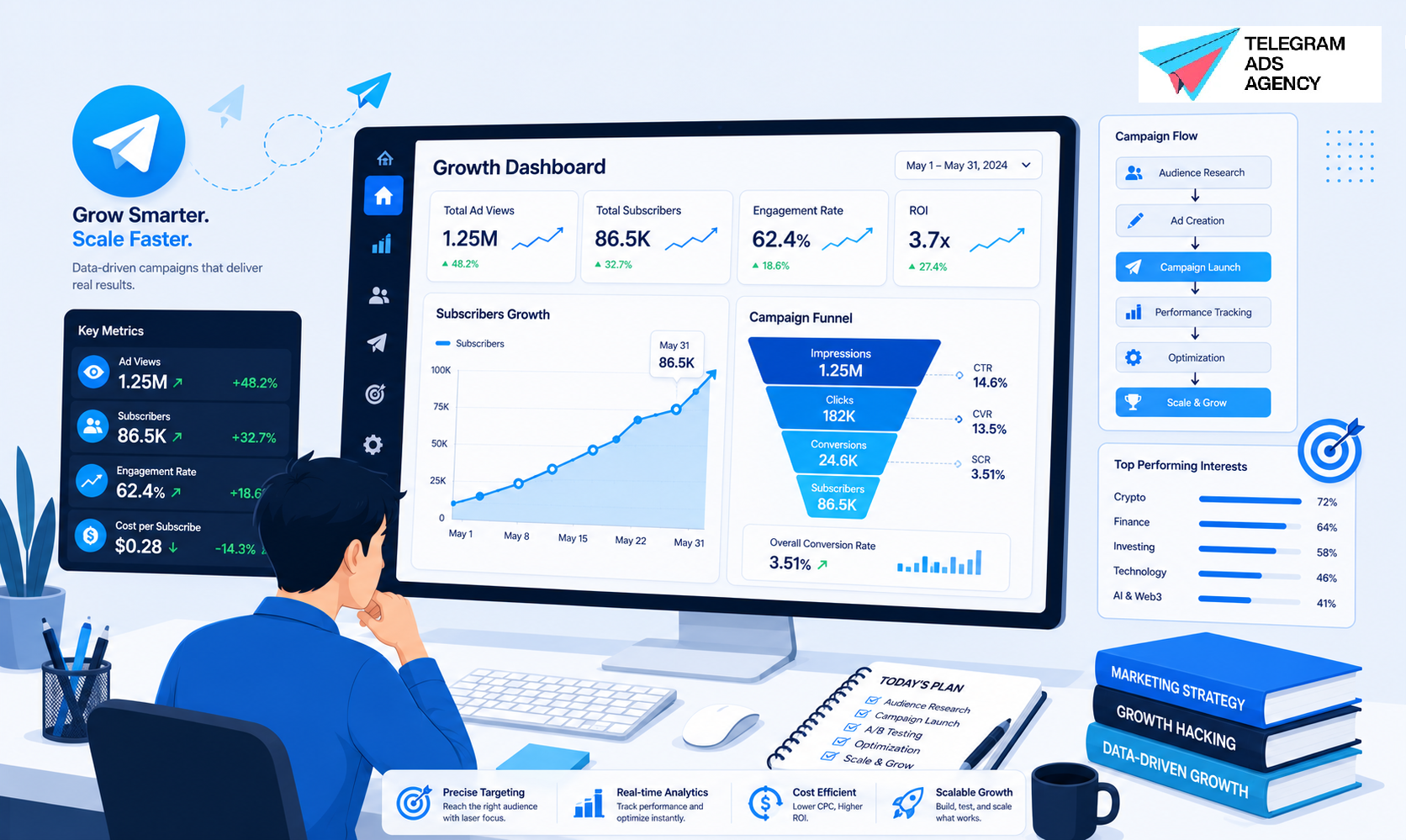
A Clear Overview of Telegram Campaign Management
Telegram campaign management is the process of planning, running, and improving paid and organic campaigns on Telegram.
For marketers, it's less about broad demographics and more about understanding specific digital communities. Each public channel has its own audience, content style, and engagement patterns.
Managing a campaign involves identifying relevant channels and placing ads where they match audience interests. It blends planning with the daily work of watching data, testing ideas, and moving budget.
Keep reading for the essential principles of effective campaign management.
Quick Campaign Management Essentials
Before you dive into the mechanics, hold onto these truths.
- Explicit parameter setting prevents media budget waste: Media buyers must choose a single metric, such as automated bot starts, explicit channel subscription growth, or off-platform link clicks, before launching an ad group to ensure your conversion tracking stays clear and accurate.
- Channel Relevance Matters: The same ad copy can perform very differently in a crypto trading channel versus a meme aggregator. Your creative should match the channel's audience and content style.
- Manage Channels Individually: Evaluate each channel placement independently. Your job is to buy more of the winners and sell the losers quickly.
- Use Data to Guide Decisions: Data shows performance results and helps guide future decisions.
What Is Telegram Campaign Management?
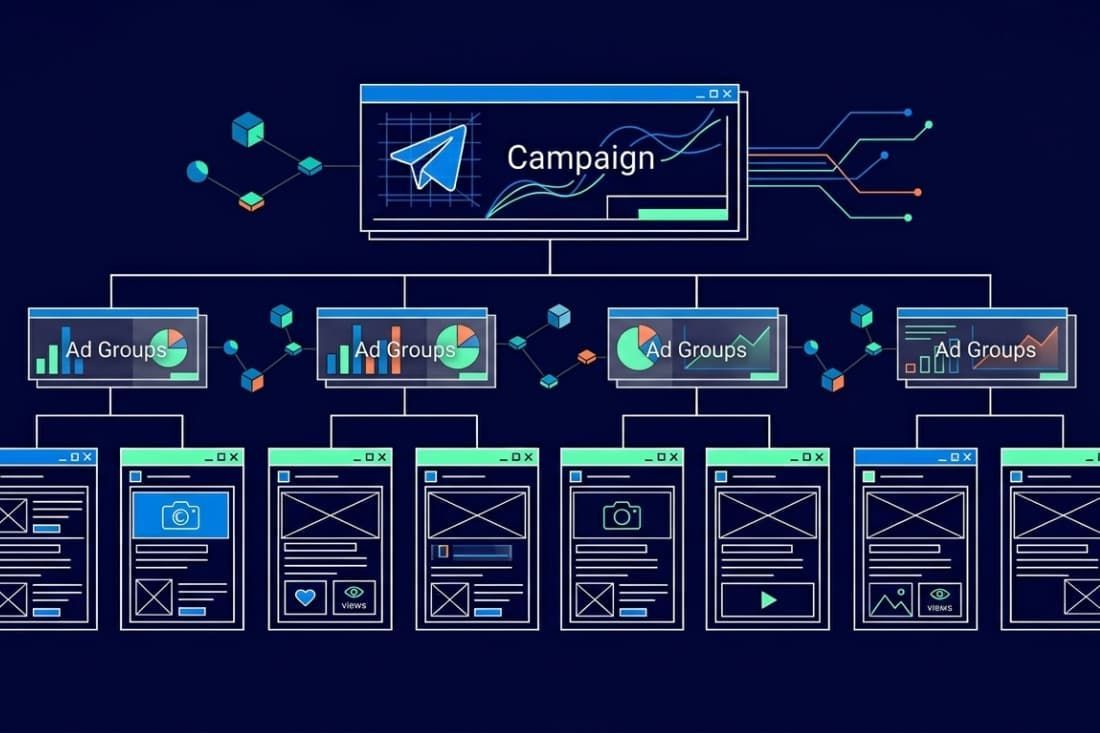
Systematic campaign management turns abstract marketing budgets into structured revenue channels. This performance cycle operates through explicit, data-backed adjustments: manual context selection, copy experimentation, auction bidding strategies, and cross-platform attribution alignment.
Managing this pipeline requires watching tracking metrics daily to ensure your media spend scales inside high-performing channels. For paid ads, the platform's controls are simple: channel selection, 160 characters of text, a link, a budget, a CPM bid.
Campaign management becomes more challenging when multiple channels, creatives, and budgets are involved. It requires ongoing decisions based on campaign performance data.
Success in managing Telegram ads campaign performance comes from maintaining this balance across all moving parts rather than focusing on a single metric.
The Six Pillars of Management
Break down your responsibility into these areas.
- Strategic Planning & Objective Setting: Defining what success looks like in measurable terms (e.g., cost per lead under $5, 1,000 new subscribers).
- Audience & Channel Acquisition: Finding and checking the public channels where your target audience actually gathers and interacts.
- Creative Development & Messaging: Creating the ad text, visuals, and linked page that will connect in each specific context.
- Budget Allocation & Bid Management: Deciding how much to spend, where to spend it, and how much to pay per thousand views (CPM) in a changing auction.
- Performance Monitoring & Analytics: Watching the data from Telegram's own stats and, more importantly, your own external tracking systems.
- Ongoing Optimisation & Scaling: The active work of pausing losers, growing winners, testing new ideas, and refreshing tired ads.
How Are Telegram Ads Structured?
The official ad platform uses a simple structure, a design choice that shapes strategy. Ads are "Sponsored Messages" that appear directly in the chat history of public channels with at least 1,000 subscribers.
The sponsored message framework forces precise copywriting rules. Your creative is limited to a strict 160-character block that can only feature a native Telegram link. This architecture eliminates visual distractions, meaning your headline hook must be perfectly tailored to match the specific context of the channel hosting your message.
This structure forces a basic shift: instead of targeting people, you are targeting contexts. Your audience is whoever is reading that specific channel at that moment. Your campaign management is therefore an exercise in context management.
Research from Bleier & Eisenbeiss shows
"Reduced access to user data shifts the burden of targeting from algorithms to advertiser strategy." - PropellerAds
Key Components of a Telegram Ad Campaign
- Ad Text: 160 characters of text. Every word must earn its place.
- Destination Link: A Telegram-native link (t.me/*). This can point to a bot, a channel, a group, or an Instant View page.
- Target Channels: The list of channels you manually select. This is the primary targeting method available.
- Campaign Budget: Your budget, divided across the channels based on your bid and their audience size.
- Campaign Metrics: Native stats showing views, approximate joins or bot starts, and spend over time.
How Do You Choose the Right Channels for a Campaign?
Credits: Story Number 1
Channel selection is the most important decision you will make. The goal is to find the most relevant audience, not the largest audience.
A channel with 50,000 highly engaged crypto traders is far more valuable for a trading bot than a channel with 500,000 general tech news followers. You are looking for channels with strong audience relevance and engagement.
This needs a mix of tool-based research and simply watching the channel. You need to understand the content style, how often they post, the moderator’s influence, and what kind of ads already do well there.
A Practical Channel Evaluation Framework
Quantitative Vetting (Quantitative Review):
- Audience historical growth tracking isolates organic channel expansion from artificial traffic inflation. Media buyers should use advanced tracking databases to look for steady, natural subscriber trends while immediately flagging sudden vertical spikes that indicate bot-manipulated member lists.
- Authentic post engagement rates reveal the true volume of active channel participants. Marketers must cross-reference real-time view counts against the total subscriber base to ensure your ad impressions are served to active users rather than inactive or automated profiles.
- Posting Frequency: Is it active daily? A dormant channel means a cold, disengaged audience.
Qualitative Vetting (Manual Review):
- Content Relevance: Read the last 50 posts. Does the main topic fit perfectly with your offer? Would your ad look out of place?
- Community Tone: Is it professional, chaotic, funny? Your ad’s tone must match.
- Ad History: Are there other sponsored messages? What do they look like? Many ads might mean the channel is heavily monetised, with an audience used to promotions.
What Does the Campaign Planning Process Look Like?
A disciplined process helps keep campaigns organised and measurable. It turns a vague idea, like "get more Telegram users", into a series of clear, measurable steps.
Well-executed managed Telegram ad campaigns typically follow a structured workflow that connects planning, testing, reporting, and optimisation. This process is a cycle, not a straight line. The end of one campaign gives you insights for planning the next.
The Campaign Management Lifecycle
- Foundation: Goal & KPI Definition. "Get 500 good leads for our B2B SaaS bot at a cost per lead of $30 or less." Everything starts from this.
- Discovery: Audience & Channel Research. Build a long list of 30-50 possible channels using tools and searches. Narrow it to a short list of 15-20 based on careful checking.
- Strategy: Offer & Messaging Architecture. Design the core offer. Create 3-5 ad versions, each testing a different angle (like focusing on a problem, a solution, or social proof).
- Execution: Campaign Setup & Launch. In the Telegram Ads platform, create campaigns. Many experienced managers make a separate ad set for each major channel to see performance clearly. Set careful starting budgets and CPM bids.
- Initial Performance Review Period: Let the campaign run, getting at least 1,000 views per ad version per channel before making big decisions. Watch both the platform stats and your own external analytics.
- Analysis: The Performance Review. After the observation window, look at the numbers. Which channel and ad combinations gave the best cost per result? Which got clicks but no conversions?
- Optimisation Phase: Stop all underperforming placements immediately. Increase the budget for the top performers by 20-50%. Move the saved money to test new channels or creatives.
- Reporting & Iteration: Write down what you learned. Update the people involved. Use the insights to improve your channel research and creative approach for the next cycle.
How Should Budget and Creative Be Managed?
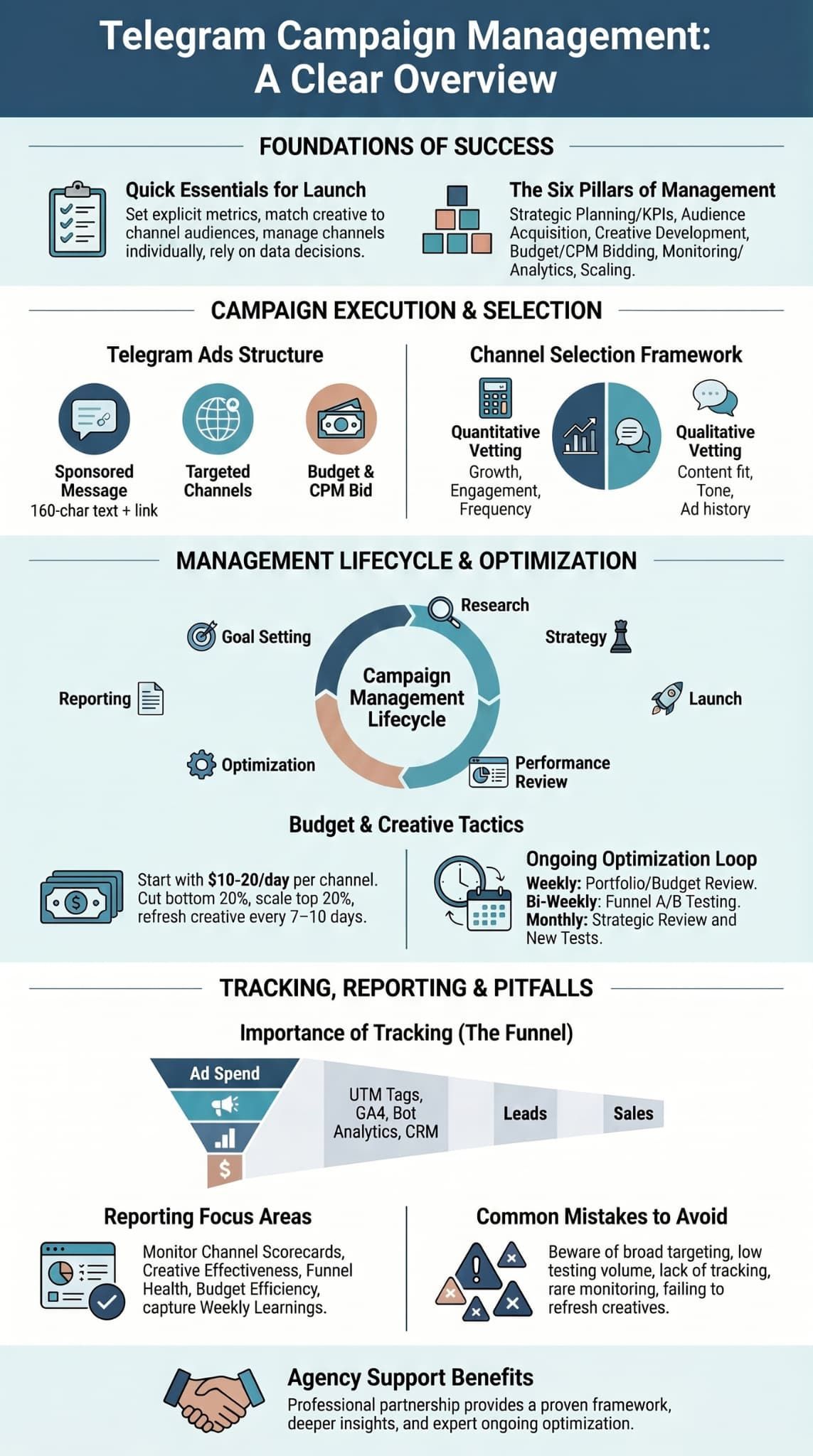
Budget and creative both have a major impact on campaign performance, and they must be managed together. A great ad in a poor channel will fail. A perfect channel with a weak ad will underperform. The budget determines how much exposure each campaign receives.
Budget Management: The Capital Allocation Strategy
- Start Small, Think Portfolio: Spread a testing budget across your 15-20 chosen channels. $10-20 per channel per day is a common starting point.
- Use CPM as a Discovery Tool: Start with a low bid (like the platform minimum). If you get no impressions, the channel's auction is competitive; slowly increase your bid until you start seeing views.
- Weekly Budget Review: Every 7 days, do a portfolio review. Calculate the cost per result for each channel. Find the bottom 20% (highest cost) and cut their budget to zero. Take that money and split it between the top 20% (for scaling) and new channel tests (for discovery).
Creative Refresh Process
- The Rule of Three: Never launch with just one ad. Launch with at least three different versions per channel to test different hooks.
- Schedule Creative Refreshes: Mark your calendar. Even a winning ad will see its click-through rate drop after 7-10 days. Have a new batch of 2-3 fresh ads ready to use.
- Match the Message to the Medium: The ad you write for a technical developer channel should use different language than the one for a casual NFT collector channel, even if the core offer is the same.
Why Does Performance Tracking Matter?
Telegram will tell you how many people saw your ad. Maybe how many clicked. It will not tell you if those clicks turned into paying customers, good leads, or even active channel members. That gap is where budgets vanish.
Tracking connects ad activity with business results. It’s how you turn "spent $500 on Telegram ads" into "spent $500 to get 22 leads, 3 of which became customers worth $2,000."
Without this bridge, you are unable to tell a high-performing campaign from an expensive mistake.
Data from Sage Journals demonstrates
"The 'dark' metaphor here refers to the opaque nature of Telegram's similar channels feature, which remains a 'black box'." - Sage Journals
Building Your Tracking Bridge
- Step 1: The Foundation. Every link in every ad must be tagged. Use tags like utm_source=telegram, utm_medium=cpc, utm_campaign=[CampaignName]. This is essential.
- Step 2: Analytics Platform. Send those tagged clicks into Google Analytics 4. Set up conversions for key events: page views, form submissions, purchases.
- Step 3: Conversion Tracking. For lead generation, use hidden form fields to capture the UTM source. For e-commerce, make sure your shop passes UTM data to the order. For bot starts, use the Bot API to log the /start command and link it back to the ad.
- Step 4: Reporting Dashboard. Bring the data together weekly: Spend from Telegram Ads Manager, conversions from GA4 or your CRM, and your calculated cost per result. A simple spreadsheet can be your most useful tool.
How Can Campaign Reporting Improve Results?
Reporting isn't about making pretty graphs for a monthly meeting. It's a tool for accountability and learning. A good report answers three questions: What happened? Why did it happen? What are we going to do about it?
It helps identify performance trends and improvement opportunities. For Telegram, where the variables are few but their interactions are complex, clear reporting is what separates systematic improvement from random guessing.
| Report Focus | Key Questions It Answers | Actionable Output |
|---|---|---|
| Channel Performance Scorecard | Which channels delivered the lowest cost per result? Highest click-through rate? Worst engagement? | Cut the bottom 3 channels. Increase budget for the top 2. |
| Creative Effectiveness Analysis | Which ad hook (problem, solution, social proof) worked best? Which is getting tired? | Stop using the tired ad. Use the winning hook more in new tests. |
| Funnel Health Diagnostic | Where are we losing people? Click → Landing Page? Landing Page → Conversion? | If drop-off is after the click, fix the landing page. If clicks are low, fix the ad. |
| Budget Efficiency Review | Is our spend in the right places? What's the return on our last budget move? | Move 15% of budget from average performers to new experimental tests. |
| Weekly Trend & Learning Log | What did we learn this week? What's our idea for next week? | Write it down: "Channel X underperformed because the audience was Ukrainian, the offer was English-only." |
What Common Mistakes Affect Telegram Campaign Performance?
Most failures are predictable and preventable. They stem from skipping steps in the disciplined framework, usually in the name of speed or simplicity.
Common Telegram Campaign Mistakes
- Broad Targeting Without Research: Selecting channels based solely on subscriber count, writing one generic ad, and blasting it everywhere. This guarantees high impressions, low relevance, and terrible conversion rates.
- Insufficient Testing: Testing only two channels with one ad, waiting weeks for “statistical significance,” and never gathering enough data to make a confident decision. This is the opposite of spray and pray, but just as ineffective.
- Launching Without Tracking: Setting up campaigns without UTM tags or any conversion tracking. You become a patron of the arts, supporting channel owners, with no idea if it’s good for business.
- Lack of Ongoing Campaign Monitoring: Launching a campaign, then checking back in a month to find the budget depleted and results mediocre. Telegram campaigns are living things that need daily or weekly attention.
- Failure to Refresh Ad Creatives: Running the same ad copy for months. Audiences tune out. CTR decays. Costs rise. You mistake platform fatigue for market saturation.
Why Does Telegram Campaign Management Require Ongoing Optimisation?

Performance changes over time due to audience behaviour, competition, and channel activity. Your competitors find the same niches you do, raising CPMs.
An ad that worked perfectly two weeks ago became stale. This is why optimizing Telegram ad campaigns requires continual testing of channels, messaging, bids, and audience response patterns. Optimisation isn't a one-time event at the end of a campaign; it's the normal state of managing a campaign.
It's the continuous process of listening to the data, respecting how the platform works, and making the small, regular adjustments that keep performance on track. It's what turns a campaign from a project with a start and end date into a sustainable growth channel.
The Ongoing Optimization Loop
- Weekly: Channel portfolio review and budget reallocation. Checking for ad fatigue.
- Bi-Weekly: Deeper funnel analysis. Landing page A/B testing for top-performing traffic sources.
- Monthly: Broader strategic review. Are our main goals still right? Should we test a new offer or audience? What new tools or channels have come up?
FAQ
How do I select the best Telegram channels for a campaign?
Choose Telegram channels based on audience interests, engagement levels, and content relevance. Review the Total channel audience and determine whether public channels, broadcast channels, or interactive groups best match your goals.
Selecting channels that align with your target audience helps improve Telegram marketing results and increases the effectiveness of your campaign.
Which metrics should I monitor during Telegram campaign management?
Monitor campaign-level metrics such as Monthly impressions, click-through rates, conversions, and engagement. A real-time dashboard improves performance visibility by showing how your campaign is performing throughout its duration.
Regularly reviewing campaign performance helps you identify problems early and make informed decisions about targeting, creative content, and budget allocation.
How can I improve audience targeting in Telegram Advertising?
Effective Telegram Advertising depends on reaching the right audience. Use targeting filters such as Countries covered, audience interests, and channel categories to improve relevance.
Well-defined targeting helps sponsored messages reach users who are more likely to engage, improving campaign performance while reducing wasted spending on irrelevant audiences.
What tools help manage Telegram campaigns more efficiently?
Many marketers use Google Sheets, Google Analytics, API access, and campaign reporting tools to manage campaigns efficiently. Features such as campaign scheduling and a campaign builder can simplify daily tasks.
These tools help organize performance data, monitor trends, and support faster decision-making on the Telegram ad platform.
How does Telegram infrastructure support long-term customer conversion funnels?
Scalable marketing operations rely on turning raw traffic into structured customer paths. By linking automated bots directly to private community groups, you can manage client onboarding processes, resolve real-time customer inquiries, and execute a consistent client retention strategy.
This integrated approach builds long-term community value, turning cold clicks into highly engaged brand advocates.
Building a Structured Telegram Campaign Process
Successful Telegram marketing is built on process, not luck. The most effective campaigns follow a clear framework for planning, testing, measuring, and improving over time. This approach helps reduce wasted spend, uncover new opportunities, and create more predictable results. A structured process helps improve consistency and campaign efficiency over time.
If you're looking to strengthen your Telegram strategy, working with a specialised
Telegram Ads Agency can help. An experienced team can provide the structure, insights, and ongoing optimisation needed to improve Telegram's effectiveness as a customer acquisition channel.
References
- https://propellerads.com/blog/adv-telegram-ads/#Step-by-step_Campaign_Configuration_and_Ad_Mechanics
- https://journals.sagepub.com/doi/10.1177/29768624261421758?icid=int.sj-abstract.similar-articles
Related Articles