Metrics to Measure Telegram Ad Success
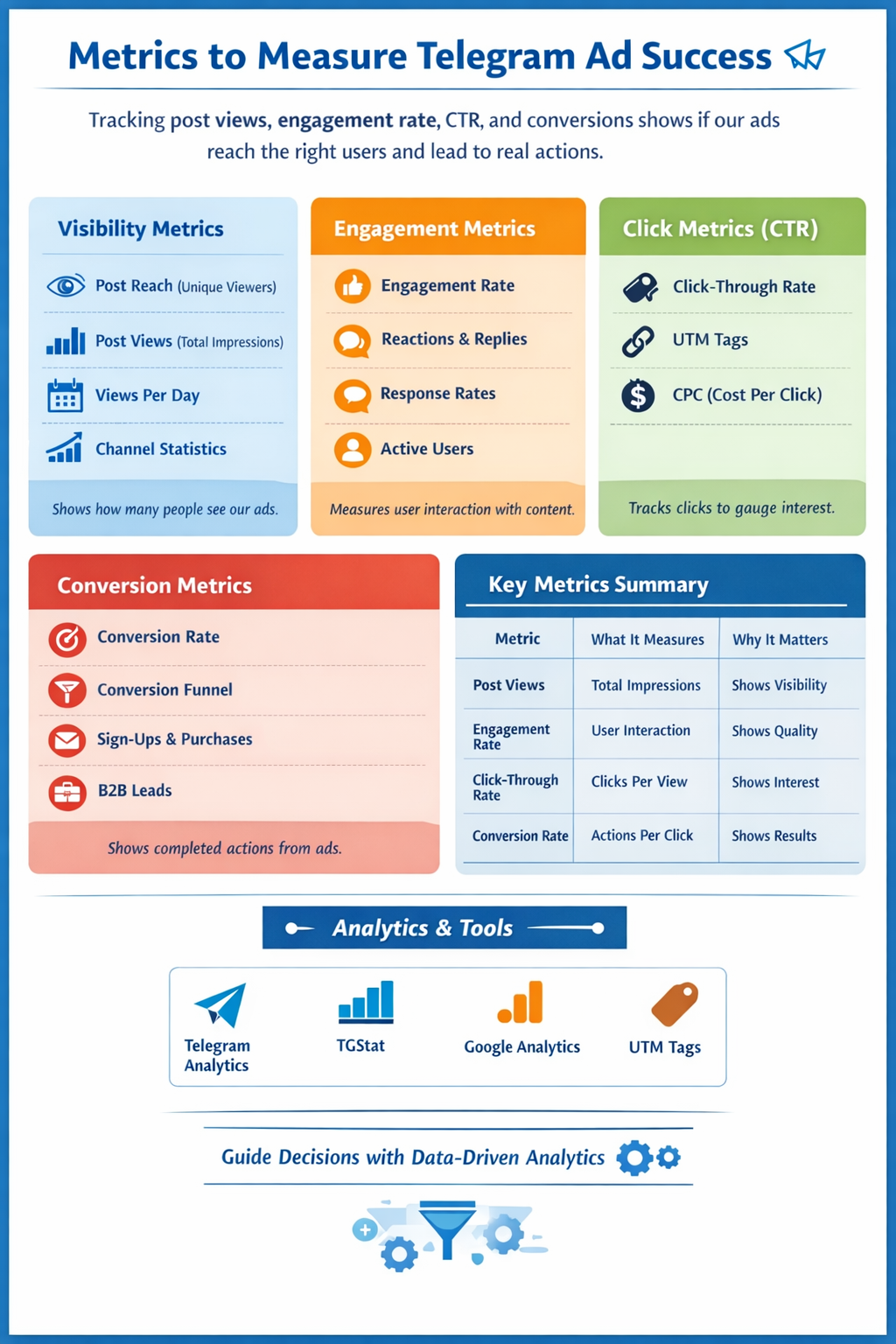
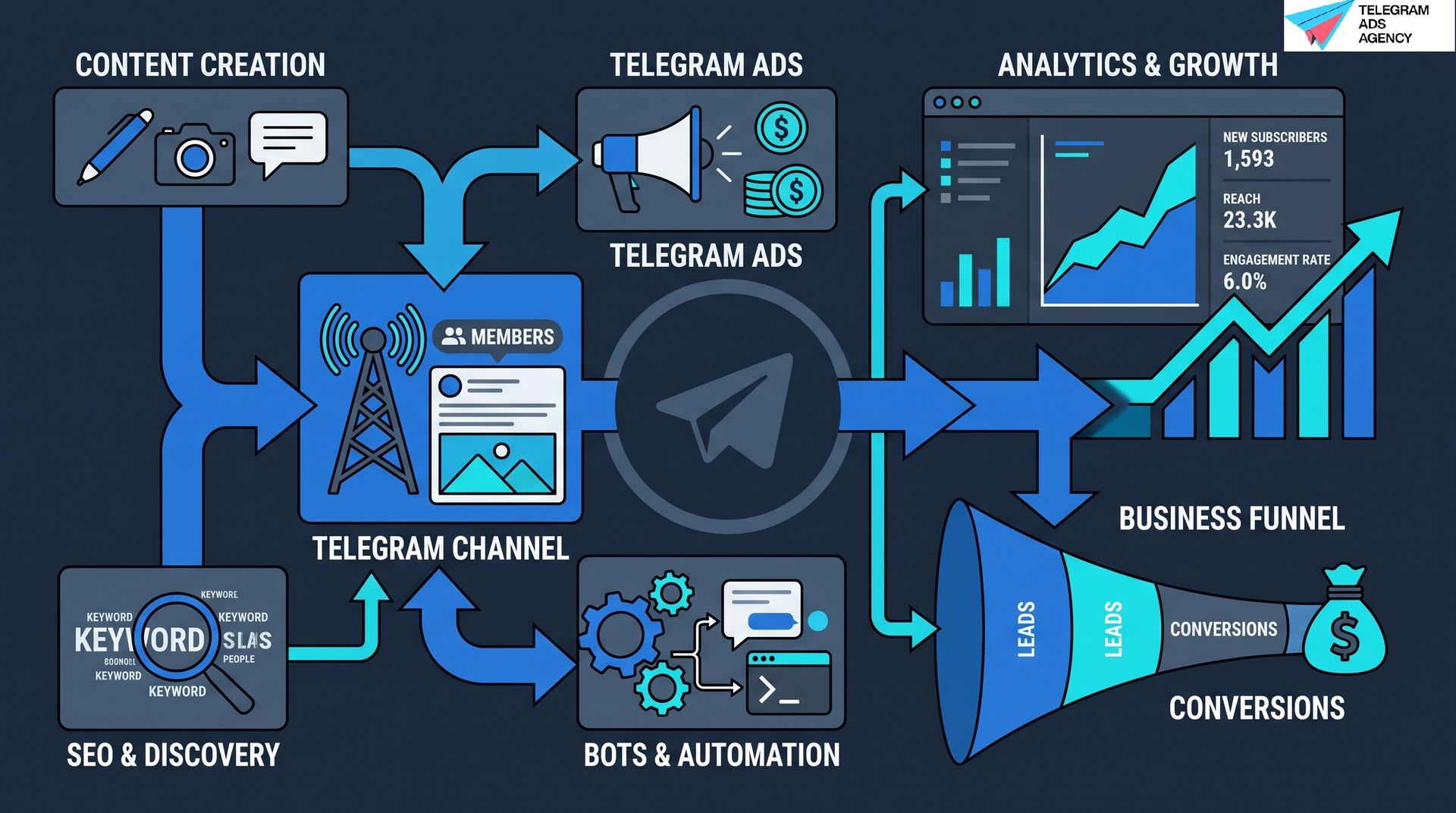
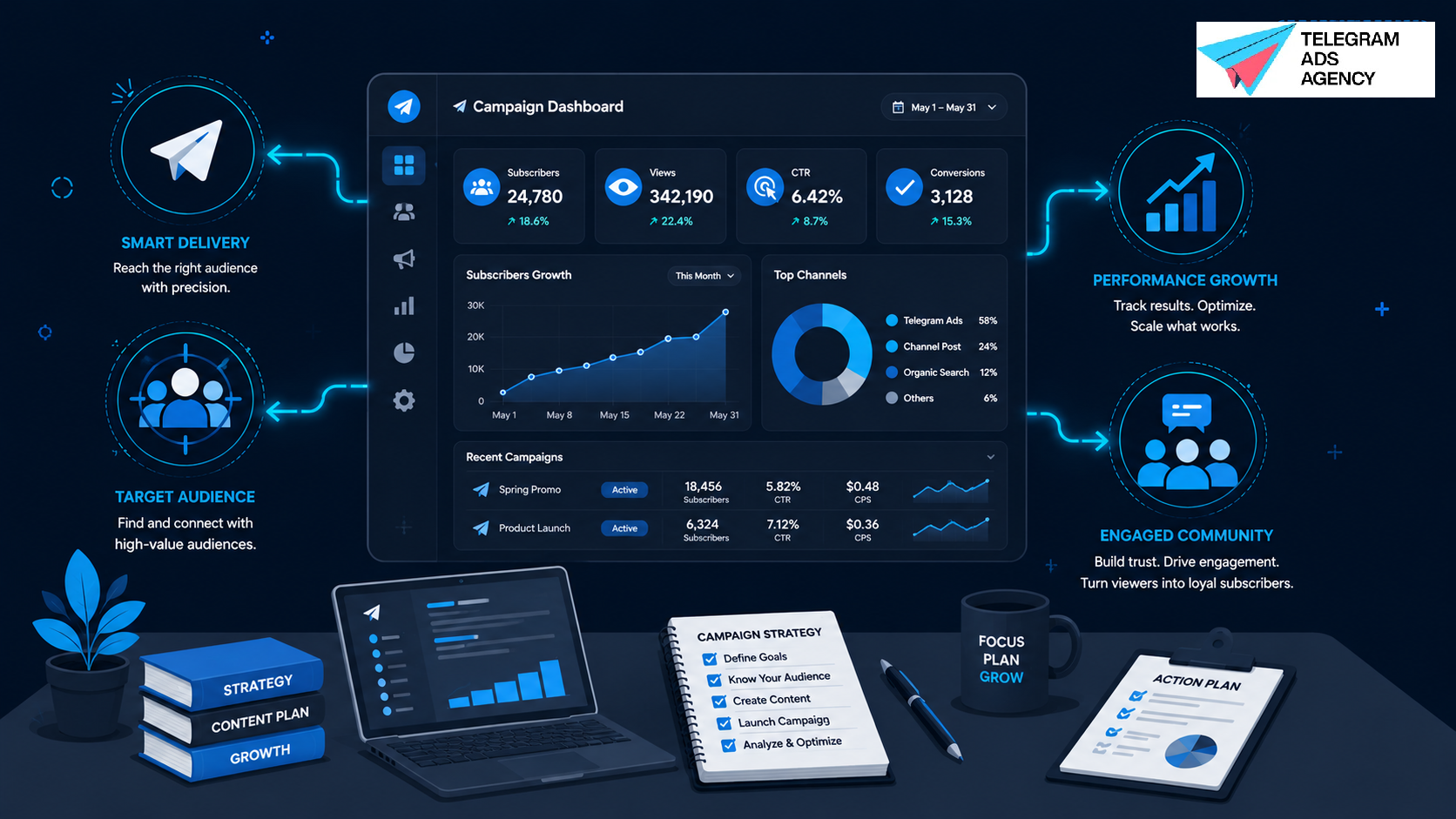
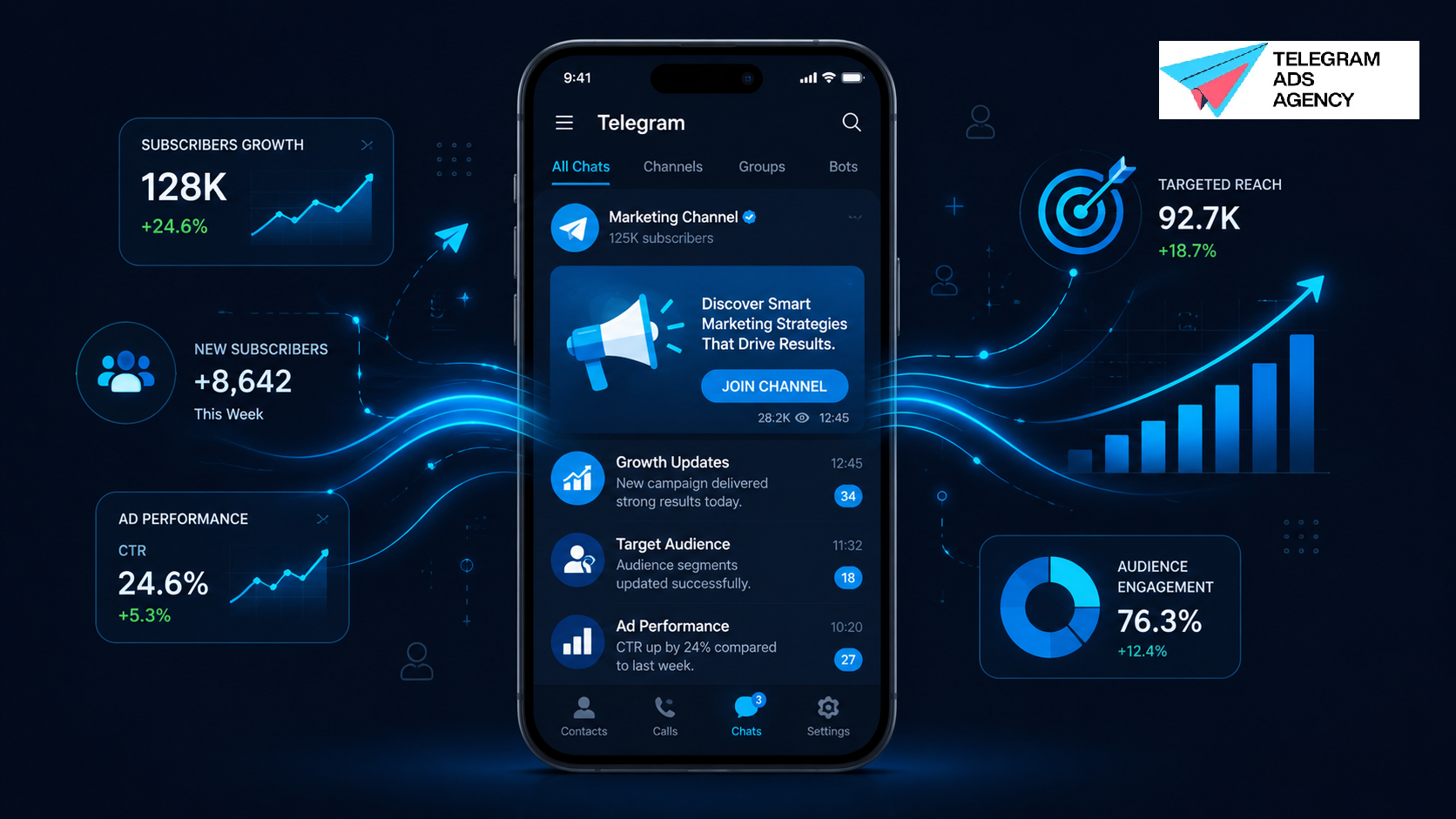
Telegram ad success is measured by tracking data like post views, engagement rate, click-through rate, and conversions. These metrics show if our campaigns reach the right users and lead to real actions.
Without clear tracking, we cannot improve results or understand performance gaps.
We need structured analytics to guide decisions and refine campaigns over time. Keep reading to see a simpler outline and how each metric works in practice.
Key Metrics for Telegram Ad Success
We focus on simple, clear metrics to measure results and improve campaign performance over time with consistent tracking.
- Post views and reach show visibility
- Engagement and CTR show interaction
- Conversions confirm real outcomes
Visibility Metrics

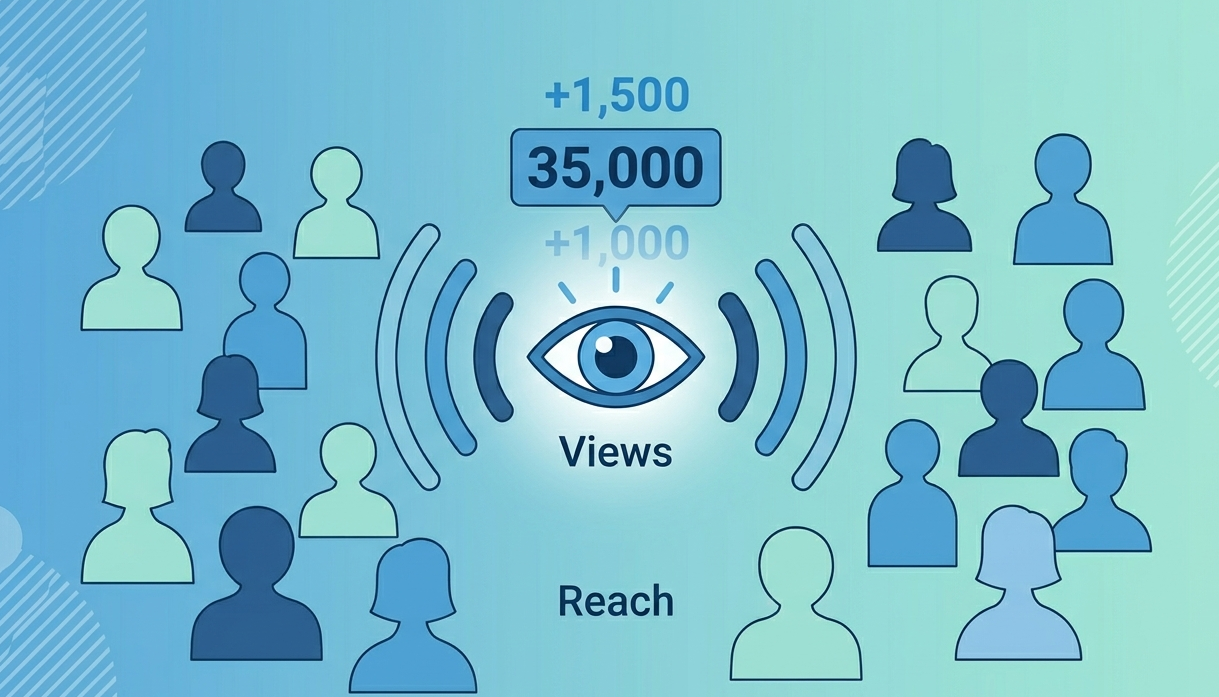
Visibility metrics show how many people see our ads and how often they appear in a Telegram Channel or Telegram group. We track post reach, message views, and views per day to understand content distribution. These numbers help us confirm whether our ads are reaching target audiences effectively.
Before moving to deeper analysis, we must confirm that visibility is strong and consistent across campaigns.
- Post reach = unique viewers
- Post views = total impressions
- Views per day = daily performance
- Channel statistics = growth overview
Low visibility usually means poor targeting or weak distribution.
Engagement Metrics
Engagement metrics measure how users interact with our content. This includes reactions, replies, and overall community engagement. We focus on active users rather than total subscribers. A large audience without interaction does not help campaign performance.
“User engagement is a quality of user experience characterized by the depth of an actor's investment when interacting with a digital system.” - Wikipedia
We review engagement before optimizing content or targeting strategies.
- Engagement Rate = interaction vs views
- Reaction rates = emoji responses
- Response rates = replies or messages
- User engagement = overall activity
Low engagement suggests content or audience mismatch.
Click Metrics (CTR)
Credits: HADAF SKILLS
Click-Through Rate shows how many users click on our ad after seeing it. It helps measure interest and relevance.
We use UTM tags and analytics tools to track clicks and understand traffic sources. CTR is a key indicator of how effective our messaging is. Before scaling campaigns, we ensure the data aligns with the fundamentals of telegram ad roi to keep acquisition costs sustainable.
Before scaling campaigns, we ensure CTR is stable and improving.
- Click-Through Rate = clicks ÷ views
- UTM tags = traffic tracking
- CPC (cost per click) = cost efficiency
- Advertising integrations = data connection
Low CTR often means weak messaging or unclear calls to action.
Conversion Metrics

Conversion metrics show how many users complete a desired action after clicking an ad. This includes sign-ups or purchases.
We track the conversion funnel to understand where users drop off. This helps improve campaign performance step by step and is essential when measuring telegram ads campaign roi to ensure profitability.
“Conversion rate is the percentage of users who take a desired action.” - Wikipedia
We rely on conversion data before increasing budgets or expanding campaigns.
- Conversion Rate = actions ÷ clicks
- Conversion funnel = user journey
- Targeted actions = campaign goals
- B2B lead generation = quality leads
Strong conversions show effective targeting and content alignment.
Growth and Audience Quality
Growth metrics help us understand if our Telegram Marketing efforts attract the right users. We track subscriber growth, retention rates, and active users to ensure audience quality. Growth without engagement is not useful.
We analyze audience data before scaling campaigns.
- Growth metrics = subscriber increase
- Active users = real engagement
- Retention rates = long-term interest
- Invite links = source tracking
Avoid fake subscribers and inflated views to maintain accuracy.
Tools and Analytics
We use tools & services to collect and analyze campaign data accurately across different platforms. Telegram Analytics provides basic insights, while tools like TGStat analytics and Google Analytics offer deeper channel analysis.
We combine multiple data sources before making decisions.
- Telegram Analytics = built-in data
- TGStat analytics = channel insights
- Google Analytics = external tracking
- Telegram API = automation tools
Reliable analytics data improves decision-making and allows us to track telegram ad agency performance results across multiple channels with high precision.
Simple Metrics Table
The table below summarizes the most important metrics we use to measure Telegram Ads performance clearly and quickly.
| Metric | What It Measures | Why It Matters |
|---|---|---|
| Post Views | Total impressions | Shows visibility |
| Engagement Rate | User interaction | Shows content quality |
| Click-Through Rate | Clicks per view | Shows interest |
| Conversion Rate | Actions per click | Shows results |
| Retention Rate | Returning users | Shows audience quality |
Optimization Basics

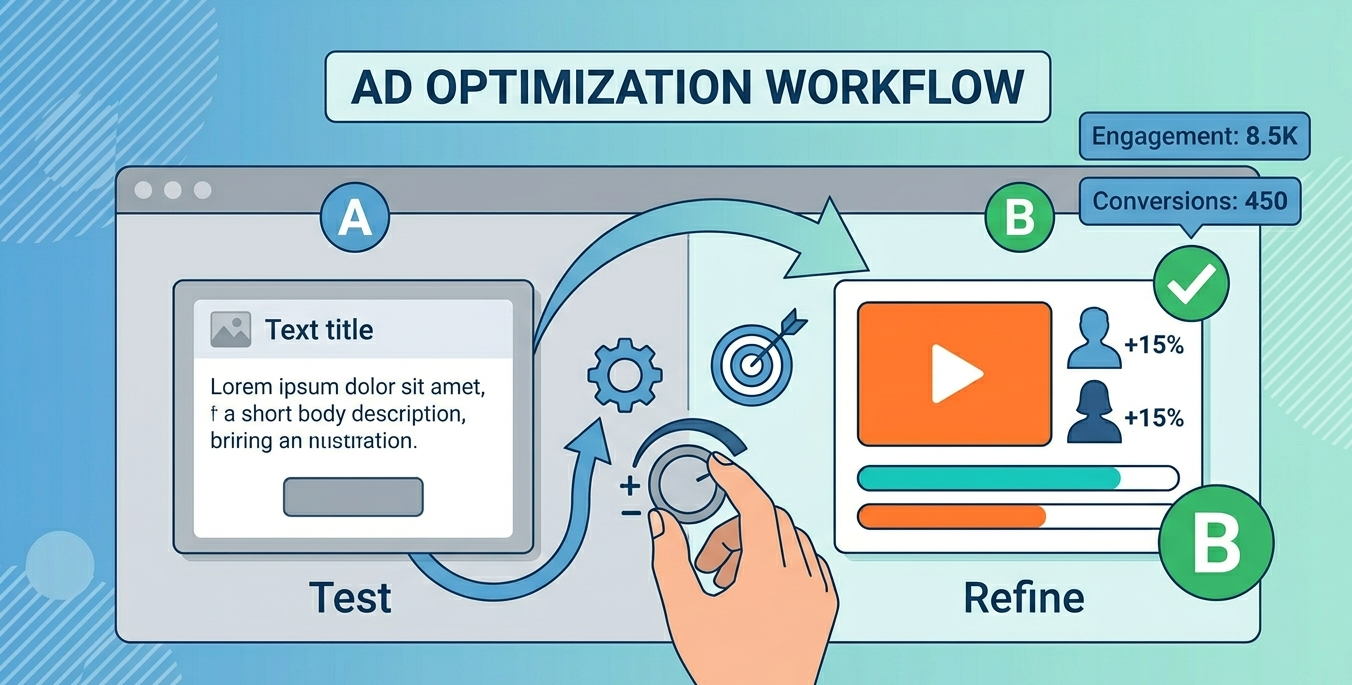
Optimization helps improve campaign performance by adjusting targeting, content, and ad formats over time. We test different ad formats like native posts and video ads to see what works best. We also monitor ad fatigue to avoid performance drops.
We refine campaigns based on analytics data consistently.
- Target audiences = correct users
- Target regions = better relevance
- Ad formats = content variation
- Automation tools = efficiency
Continuous optimization leads to better results.
FAQ
How do we track Telegram Ads performance across different channels?
We track Telegram Ads performance using Telegram Analytics, channel statistics, and external tools like Google Analytics. We monitor post views, message views, and click-through rates using UTM tags.
This helps us compare performance across a Telegram Channel and Telegram group. Consistent channel analysis ensures our marketing efforts stay aligned with campaign statistics and target audiences over time.
What metrics show real user engagement in Telegram Marketing?
We focus on engagement rate, reaction rates, response rates, and active users to measure real user engagement. These metrics reflect community engagement and user interaction with native posts or video ads.
High engagement shows strong content relevance. We also track retention rates and views per day to understand long-term user engagement and overall content performance in Telegram Marketing campaigns.
How can we measure conversions from Telegram Ads effectively?
We measure conversions using conversion rate, conversion funnel tracking, and UTM tags connected to analytics tools. This helps us follow users from clicks to targeted actions like sign-ups or purchases.
We also review click-through rates and CPC (cost per click) for efficiency. Accurate analytics data ensures better understanding of B2B lead generation and overall marketing effectiveness.
Which tools help with Telegram analytics and campaign tracking?
We use Telegram Analytics, TGStat analytics, and Google Analytics for tracking campaign performance. Automation tools and Telegram API support data collection and reporting.
These tools provide statistics and analytics for channel analysis, advertising data operator insights, and campaign statistics.
They also help manage ad creation and management through advertising accounts and optimization tools for better results.
Final Insights on Measuring Telegram Ad Success
Measuring Telegram ad success requires clear metrics such as visibility, engagement, clicks, and conversions. These indicators help us understand campaign performance and improve results over time. Without proper tracking, we cannot make informed decisions or scale effectively.
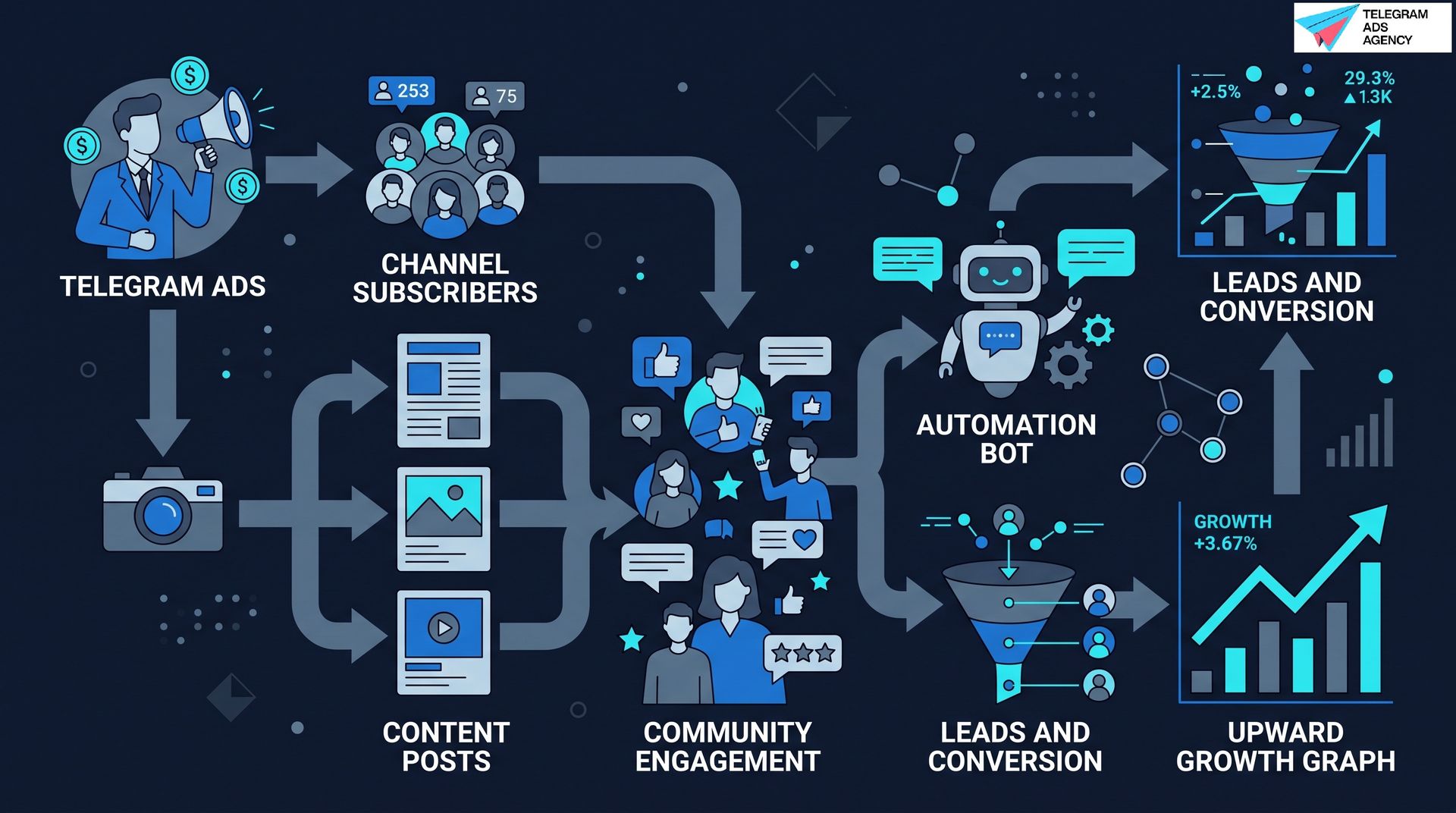
We can manage campaigns more efficiently with support from Telegram Ads Agency, which provides data-driven strategies, campaign monitoring, and targeted optimization. Their services support subscriber growth, engagement, and conversions through structured Telegram advertising.
References
- https://en.wikipedia.org/wiki/User_engagement
- https://en.wikipedia.org/wiki/Conversion_marketing