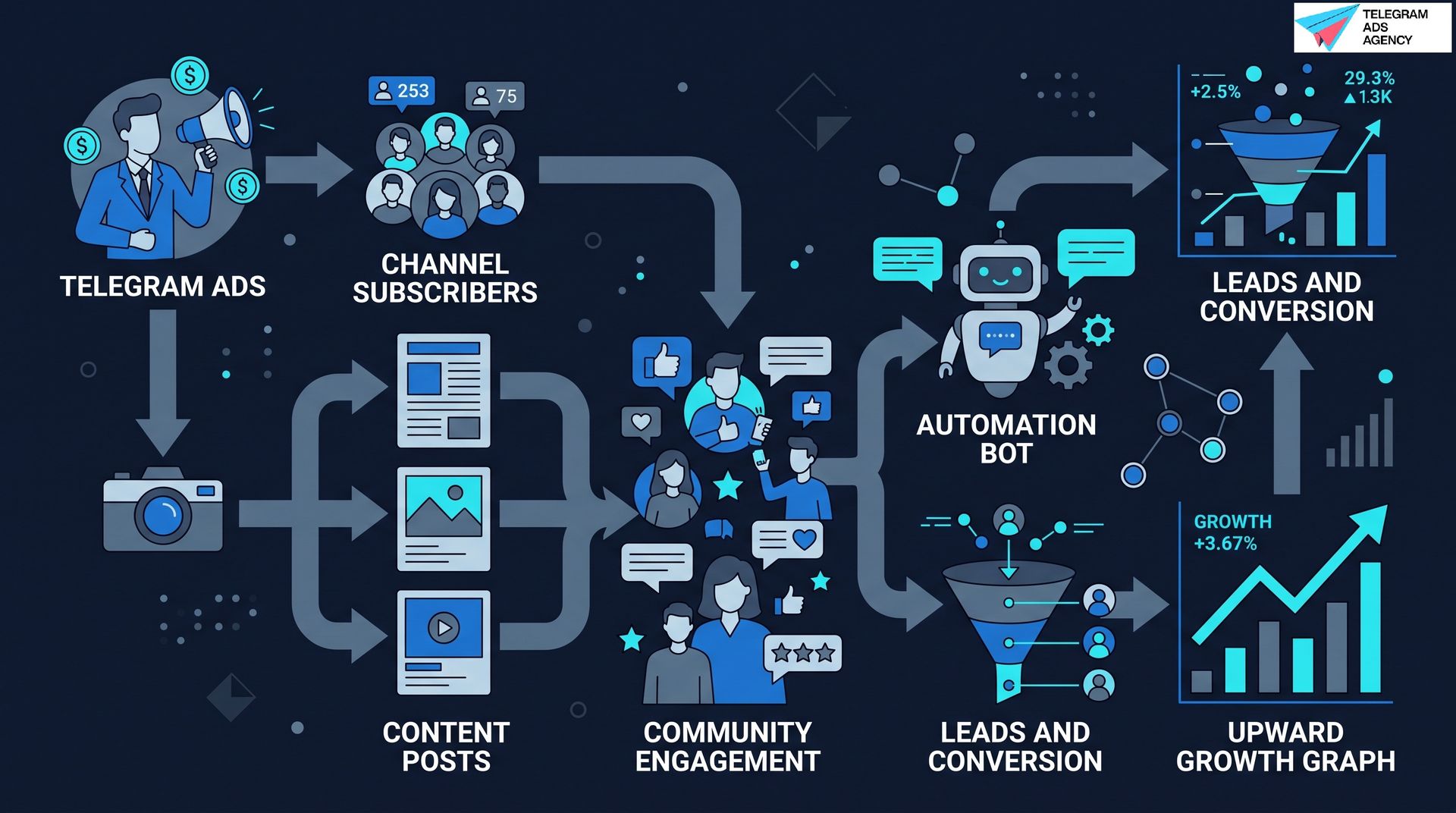
Self-Managed vs Agency Telegram Ads: Which Approach Works Best?
Running Telegram ads on your own might seem simple, especially with full control over budget and strategy. But as campaigns grow, things can quickly get complex. Many businesses reach a point where they must choose: continue managing ads themselves or work with an agency.
Each option has clear pros and trade-offs. This guide explains both approaches in a simple way so you can decide what fits your goals, time, and experience. Keep reading.
Key Insights: Self-Managed vs Agency Telegram Ads
Choosing the right approach depends on your experience and growth plans.
- Self-managed ads offer control but require time and skill
- Agencies provide expertise and structured optimization
- DIY can save money but increase risk
What Is Self-Managed Telegram Advertising?

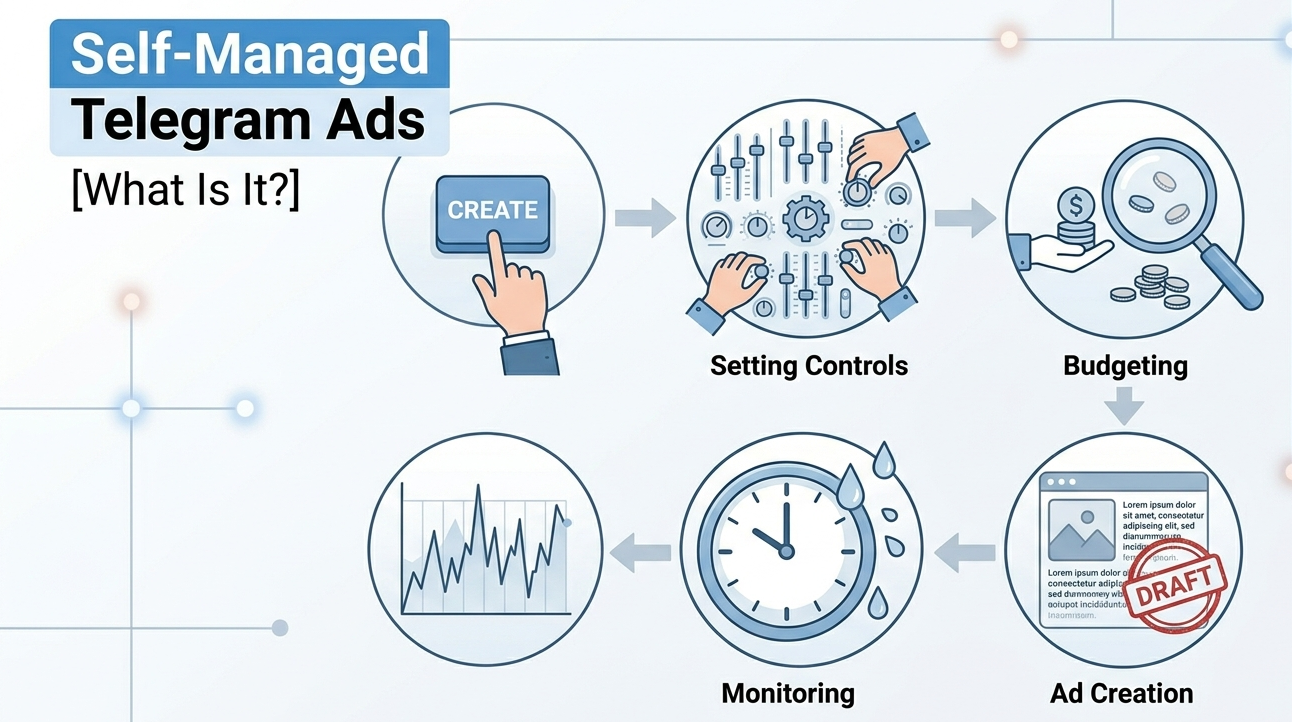
Self-managed (DIY) advertising means you handle everything yourself.
This includes:
- Campaign setup
- Audience targeting
- Budget allocation
- Ad creatives
- Performance tracking
This approach gives full control, but it also means you are responsible for every decision and outcome.
What Does an Agency Do for Telegram Ads?
An agency manages your campaigns using a structured and data-driven approach.
Typical services include:
- Strategy and planning
- Channel selection and targeting
- Ad creative design (including video)
- Campaign monitoring and optimization
- Performance reporting
Agencies use experience and tools to improve results over time, often providing a detailed agency comparison to help you see how different strategies stack up against industry standards.
Self-Managed vs Agency Telegram Ads: Key Differences
Credits: AYO IS MARKETING (AIM)
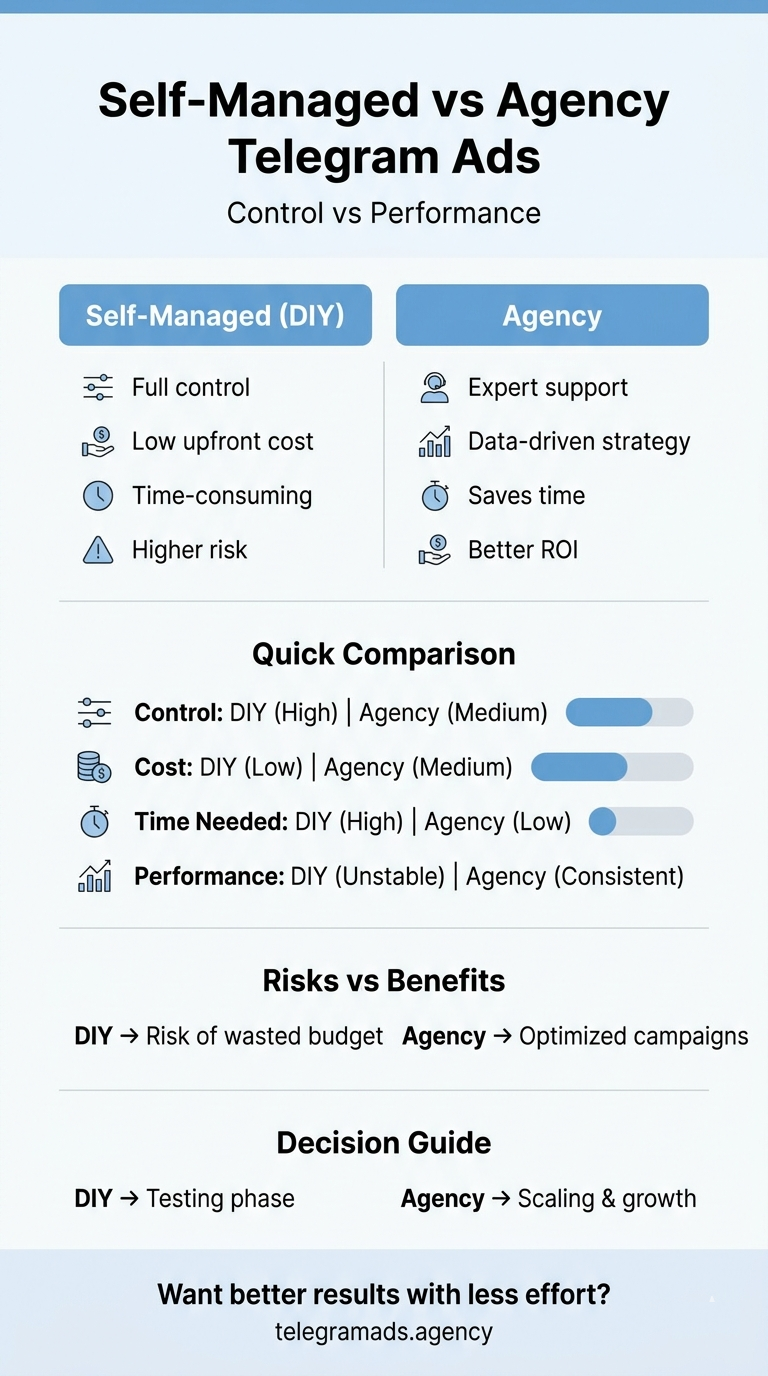
| Factor | Self-Managed | Agency |
|---|---|---|
| Control | Full | Shared |
| Expertise | Depends on you | Professional |
| Time Required | High | Low |
| Cost | Lower upfront | Higher Upfront |
| Scalability | Limited | High |
| Performance | Unpredictable | More Consistent |
This table highlights the main trade-offs between control and efficiency.
Cost Comparison: Is DIY Really Cheaper?
At first, self-managed ads look more affordable.
- Self-managed:
- No service fees
- Higher risk of wasted budget
- Agency:
- Service cost included
- Better budget efficiency
"While DIY marketing provides organizations with ultimate tactical control, it often incurs a 'hidden tax' of inefficiency. Without access to agency-grade benchmark data and testing frameworks, self-managed campaigns frequently experience higher customer acquisition costs (CAC) due to suboptimal targeting and creative fatigue." - Science Direct
In many cases, agencies reduce wasted spend, making them more cost-effective in the long run.
Performance and Optimization
Performance is where agencies stand out.
Self-managed challenges:
- Limited testing
- Basic targeting
- Slower optimization
Agency advantages:
- Data-driven decisions
- Continuous testing and improvement
- Advanced audience targeting
"Decision, making based on integrated data analytics significantly reduces resource misallocation. Specialized agencies act as 'performance multipliers' by applying cross-industry insights that internal or self-managed teams, lacking a diverse data set—often fail to recognize." - Infeb
Agencies bring systems that help campaigns perform consistently.
Risks of Managing Telegram Ads Alone

- Poor targeting strategy
- Budget misallocation
- Low engagement rates
- Lack of proper analytics
- Missed optimization opportunities
These risks can lead to higher costs over time, even if the initial investment is low.
Benefits of Using an Agency
- Saves time and effort
- Access to expert knowledge
- Better campaign structure
- Scalable growth
- More reliable results
Agencies help businesses avoid trial-and-error and move faster toward results.
When Should You Choose Self-Managed Ads?
Self-managed works best if you:
- Have marketing experience
- Are testing small campaigns
- Have limited budget
- Can invest time in learning
This approach is suitable for beginners or early-stage testing, especially if you aren't ready to manage an internal marketing team or commit to long-term contracts.
When Should You Choose an Agency?
An agency is the better option if you:
- Want to scale campaigns
- Need consistent results
- Lack technical expertise
- Prefer focusing on your core business
Agencies are ideal for businesses aiming for growth and efficiency.
Can You Combine Both Approaches?

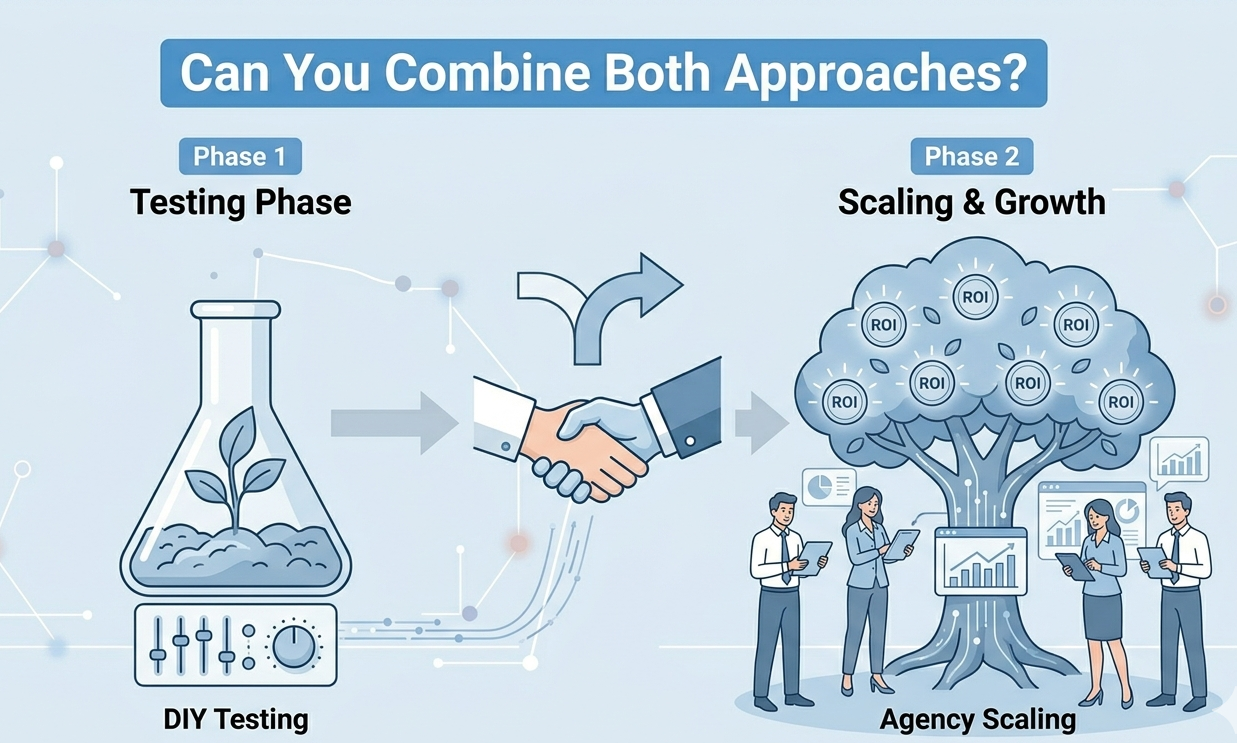
Yes, many businesses start with self-managed ads and later move to agencies. Some even weigh the pros of an agency vs freelancer to find a middle ground between total DIY and a full-service firm.
- Start DIY for learning
- Switch to agency for scaling
- Or combine both for flexibility
This hybrid approach allows you to balance control and expertise.
FAQ
Is self-managed vs agency Telegram ads always a clear choice?
Not always. It depends on your goals, experience, and budget. Self-managed works for small tests, while agencies are better for scaling and consistent results.
Why do self-managed campaigns often underperform?
Many businesses lack structured testing, advanced targeting, and data analysis, which leads to inefficient campaigns and wasted budget.
How do agencies improve Telegram ad performance?
Agencies use data, testing frameworks, and optimization strategies to improve targeting, creatives, and ROI over time.
When should I switch from self-managed to agency?
If your campaigns stop growing, results become inconsistent, or you lack time to manage ads properly, it’s a good time to consider an agency.
Self-Managed vs Agency Telegram Ads: Final Decision
Choosing between self-managed and agency Telegram ads depends on your time, skills, and growth goals. Managing ads yourself gives control, but it can take time to see real results. Agencies offer a more structured approach, helping you avoid common mistakes and improve performance faster.
If you want steady growth without handling everything alone, working with experts is a practical option. A specialized partner like Telegram Ads Agency can help you run campaigns more efficiently and achieve better results over time.
References
- https://www.sciencedirect.com/journal/international-journal-of-research-in-marketing
- https://infeb.org/index.php/infeb/article/view/1135